For homes
We dry houses, condos and rentals across Richmond. You get daily readings and a report your insurer can use.
- Supply line leaks
- Roof and attic leaks
- Slab moisture under floors
structural drying richmond TX is the work of removing trapped moisture from your walls, floors, framing and attic after a leak, storm or backup. We handle homes and businesses across Richmond, Texas, from slab leaks in Aliana to roof leaks near Harvest Green. Water keeps moving after the source stops, so we start drying the same day you call.
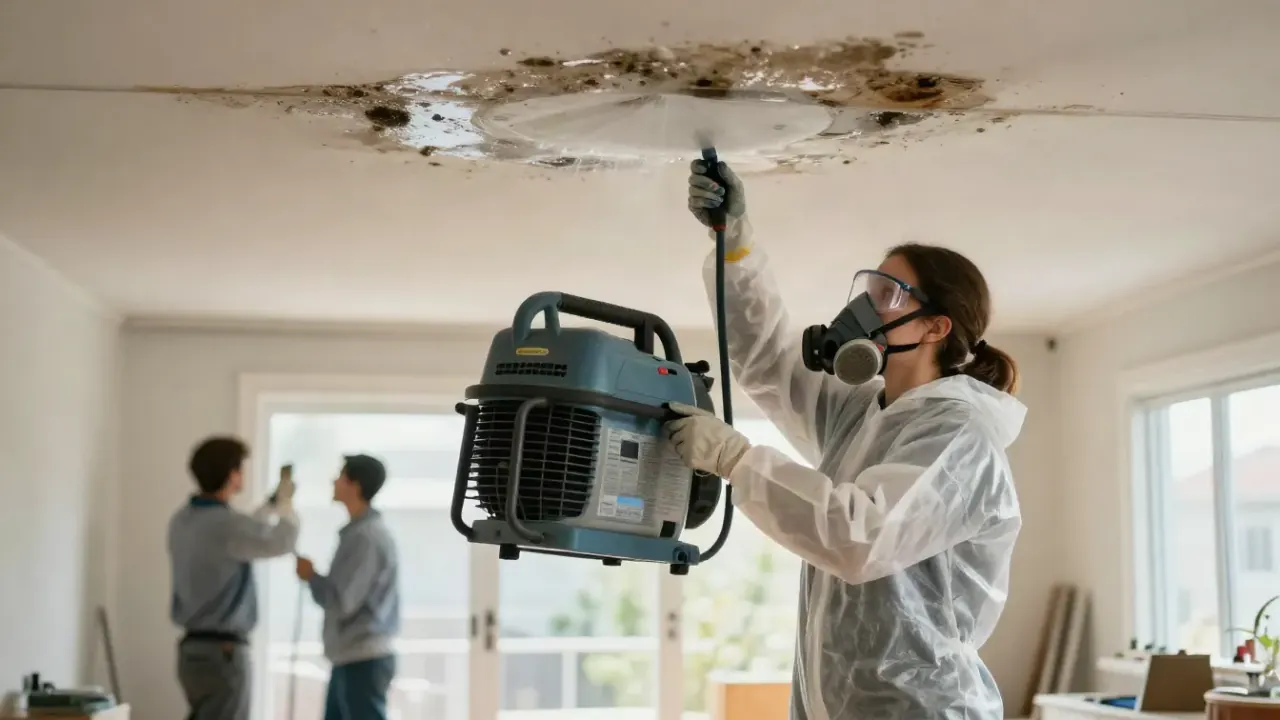 Moisture mappedEquipment setReadings logged
Every structural drying richmond TX job includes the assessment, the equipment, the daily monitoring and the final report. What changes from job to job is how much material is wet and how long it takes to dry. Here is what you can count on being part of the job.
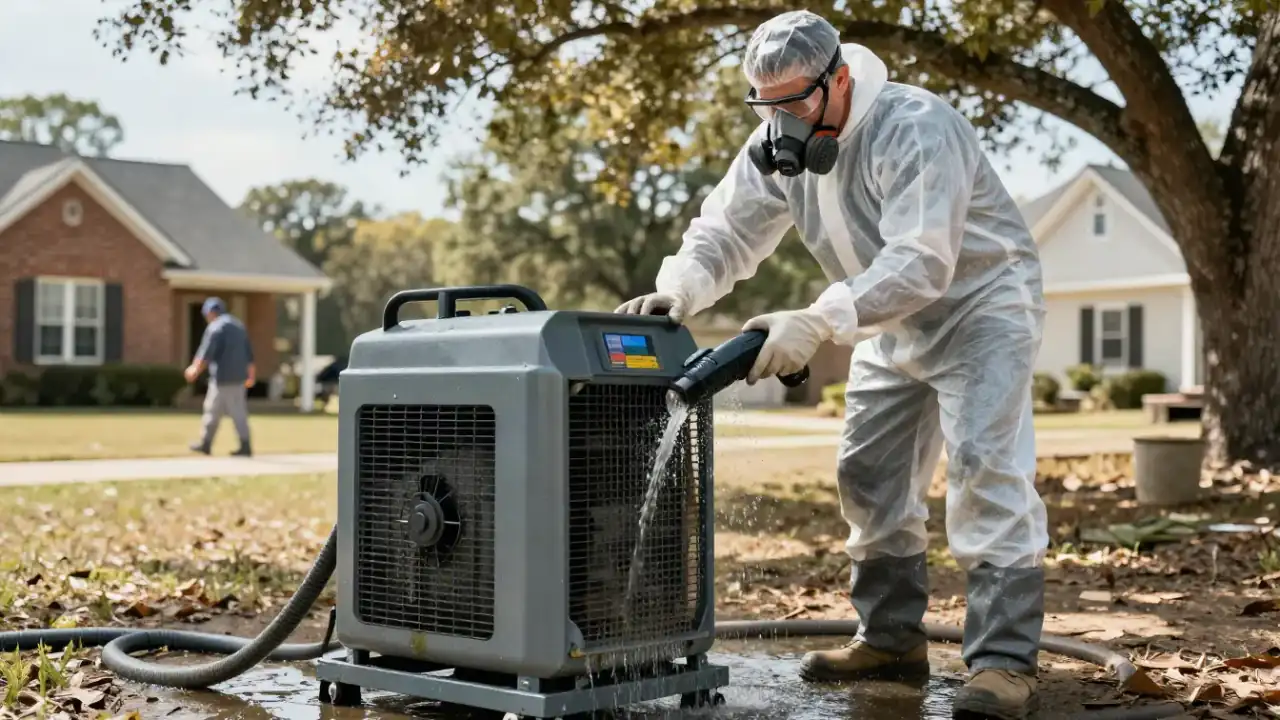
Thermal imaging, pin meters and boroscopes to find where the water went. This happens before any equipment is set, and it determines how the rest of the job is built.
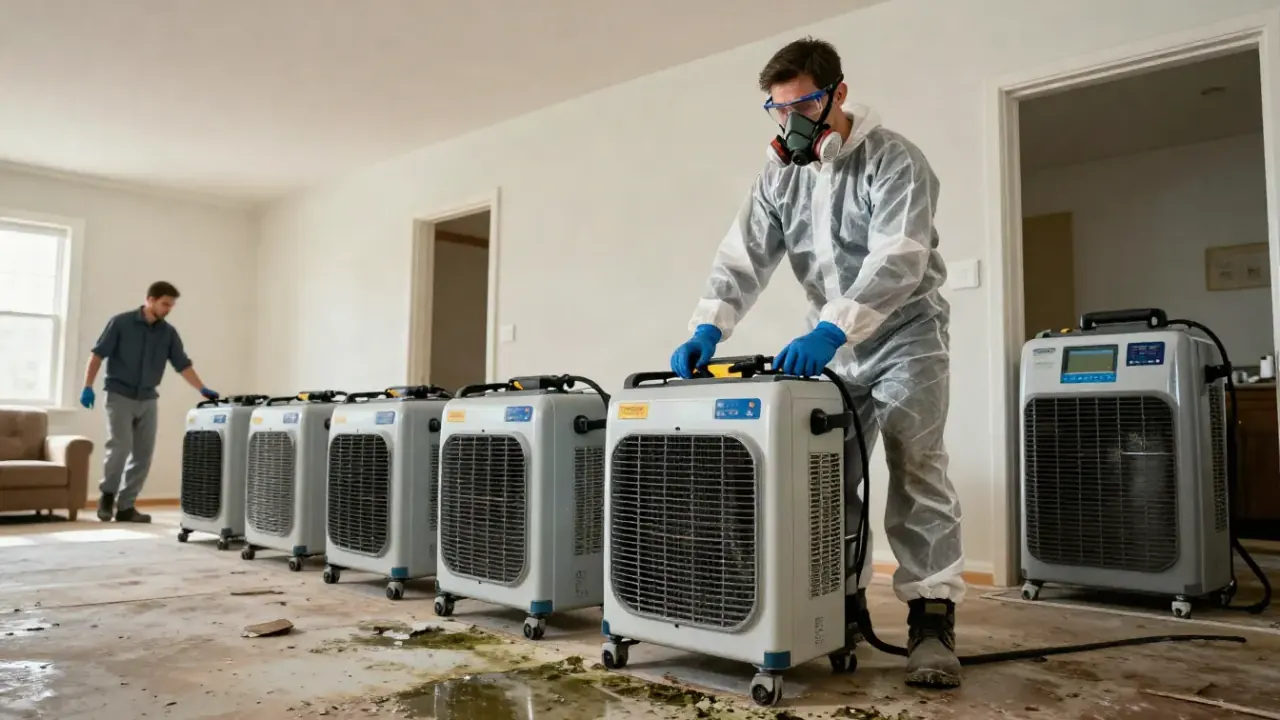
Dri-Eaz and Phoenix Restoration Equipment sized to the affected area. We position them to move air across wet surfaces and pull moisture out of the room air.
We return each day to log readings, adjust equipment and check for new wet spots. You get a text before we arrive and a summary when we leave.
Where water sat long enough to raise mold risk, we apply antimicrobial solutions to framing and cavity surfaces before closing anything up.
Photos, daily meter logs and a written summary of the dry-down. This is the document your insurance adjuster will ask for.
The approach is the same for a home and a business. What changes is the access, the schedule and who needs the paperwork.
We dry houses, condos and rentals across Richmond. You get daily readings and a report your insurer can use.
We dry offices, retail spaces and small warehouses in Richmond. Work is scheduled around your hours to keep the doors open.
A plain-language look at what structural drying richmond tx involves and when it is needed.
See how it worksstructural drying richmond TX is the controlled removal of moisture from building materials that have absorbed water. It is not a fan pointed at a wet rug. We map the moisture with thermal imaging cameras and pin-type meters, then set a drying system sized to the cubic footage of the affected rooms. Air movers keep air moving across wet surfaces while dehumidifiers pull that moisture out of the air so it does not settle back into the drywall.
Richmond sits on clay-heavy soil and a high water table, so a slab leak or foundation water intrusion can push moisture up through flooring for weeks before you notice. Most calls we run come from burst pipes, appliance overflow, roof leaks and storm flooding. If you have been searching for drying services near Harvest Green or structural drying richmond TX near me, the first step is the same: find where the water actually went.
Drying is a measured process, not a fan pointed at a wet wall.
Five steps, from the first call to the final reading. You will know what is happening and when it ends.
You call, we ask what happened and where the water showed up. We schedule a visit, usually the same day. On arrival we walk the space with you, find the source, and check whether it is still active. If a supply line is still spraying, we shut it down first.
Thermal imaging cameras show cold, wet zones behind tile and drywall. Moisture meters and boroscopes confirm how deep it went. This takes 30 to 60 minutes on a typical Richmond home and tells us exactly how much equipment the job needs.
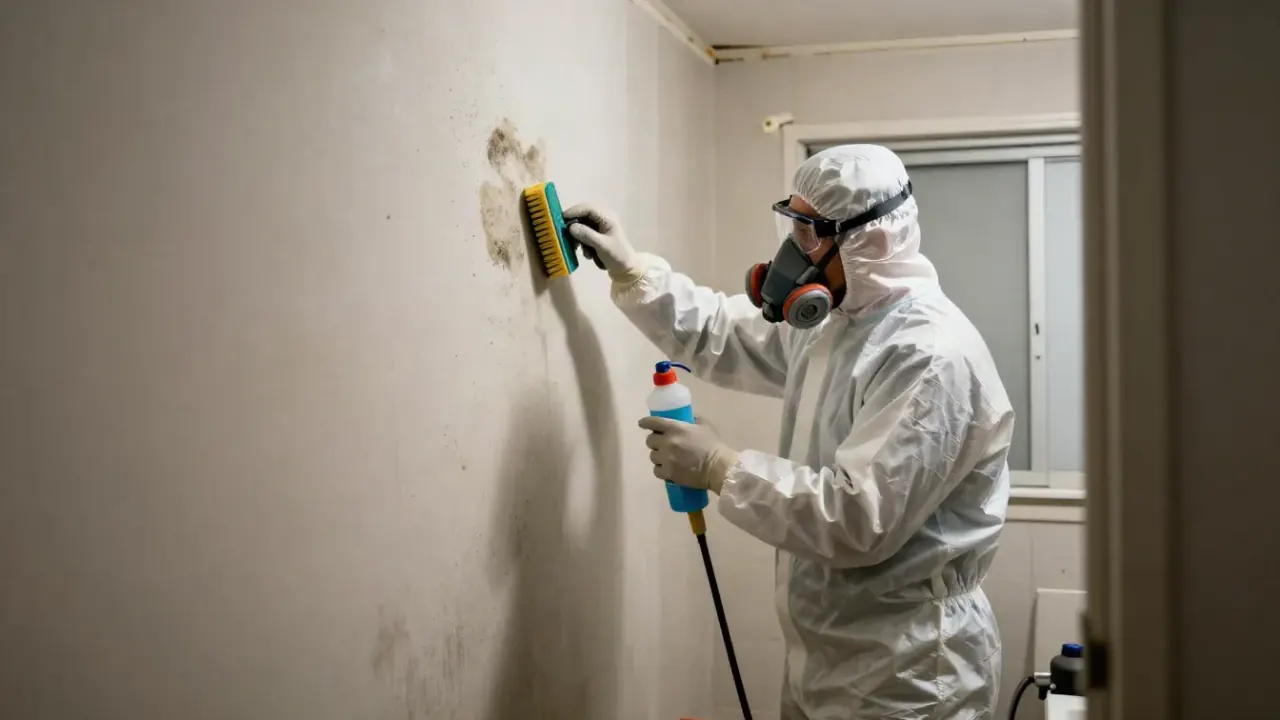
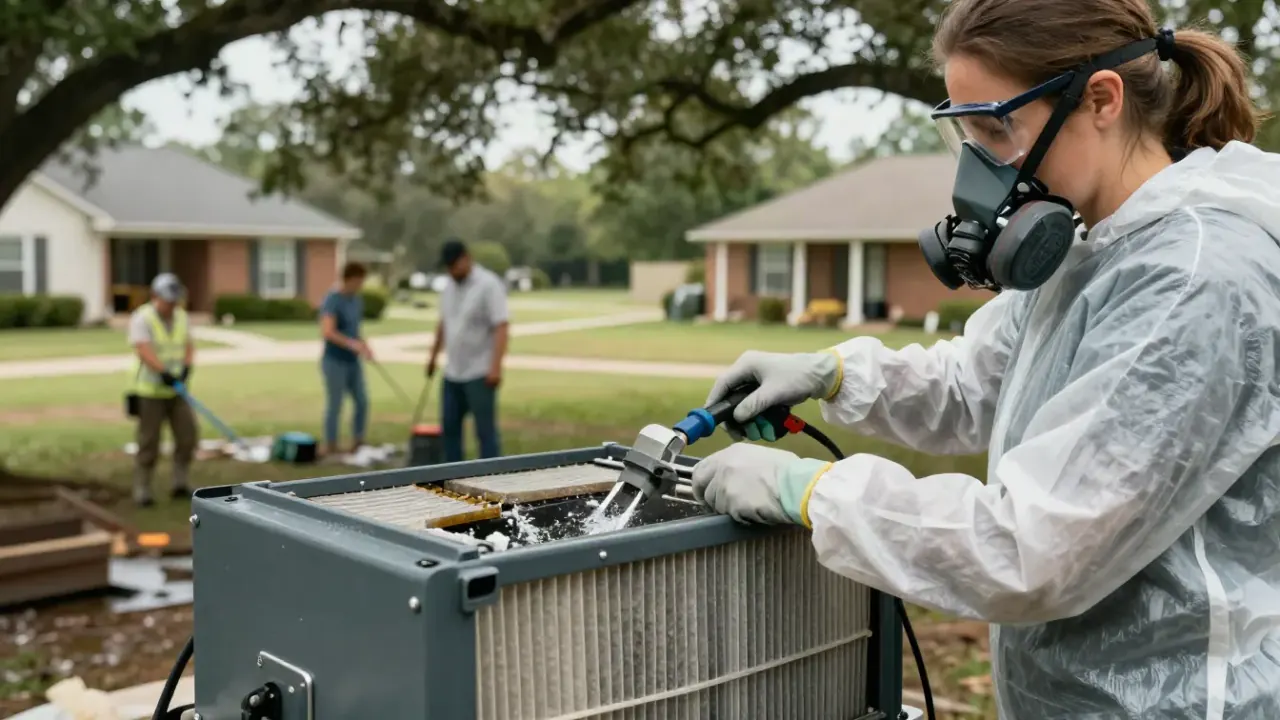
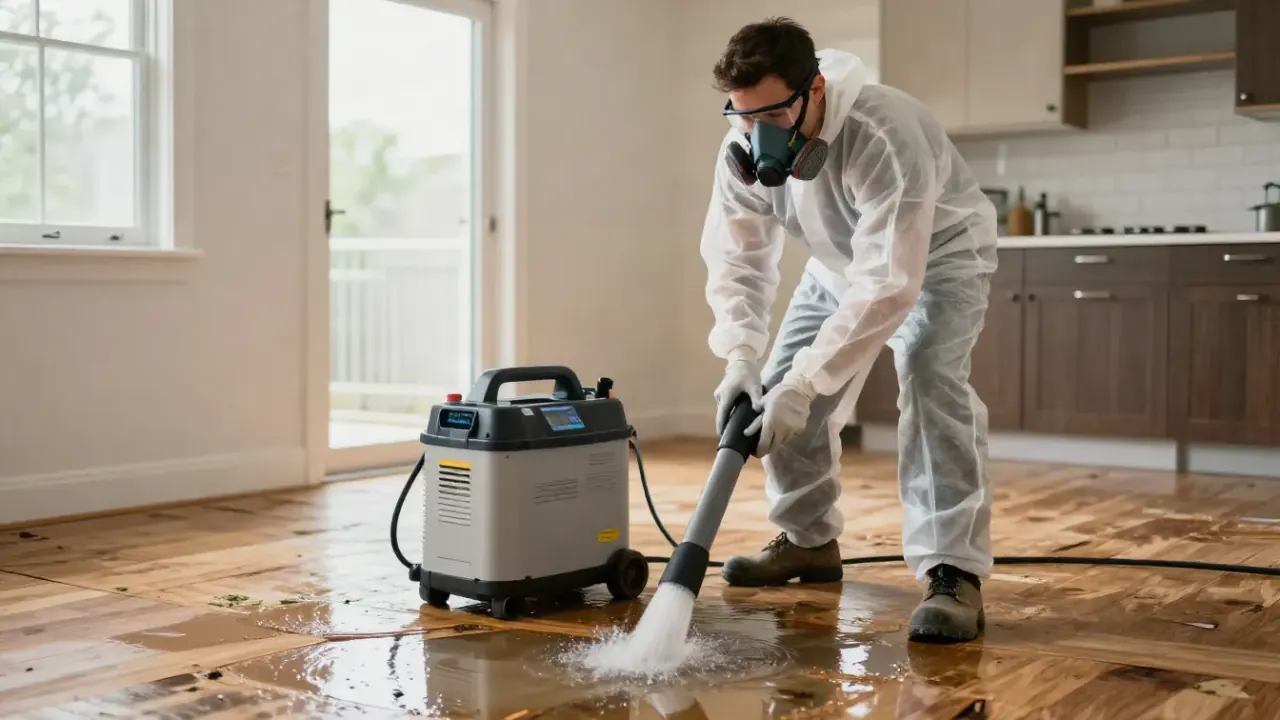
We place air movers along walls and dehumidifiers in the wettest rooms, then dial in temperature and airflow. Extraction units pull standing water first when needed. Setup usually runs two to four hours, and we explain what each machine is doing.
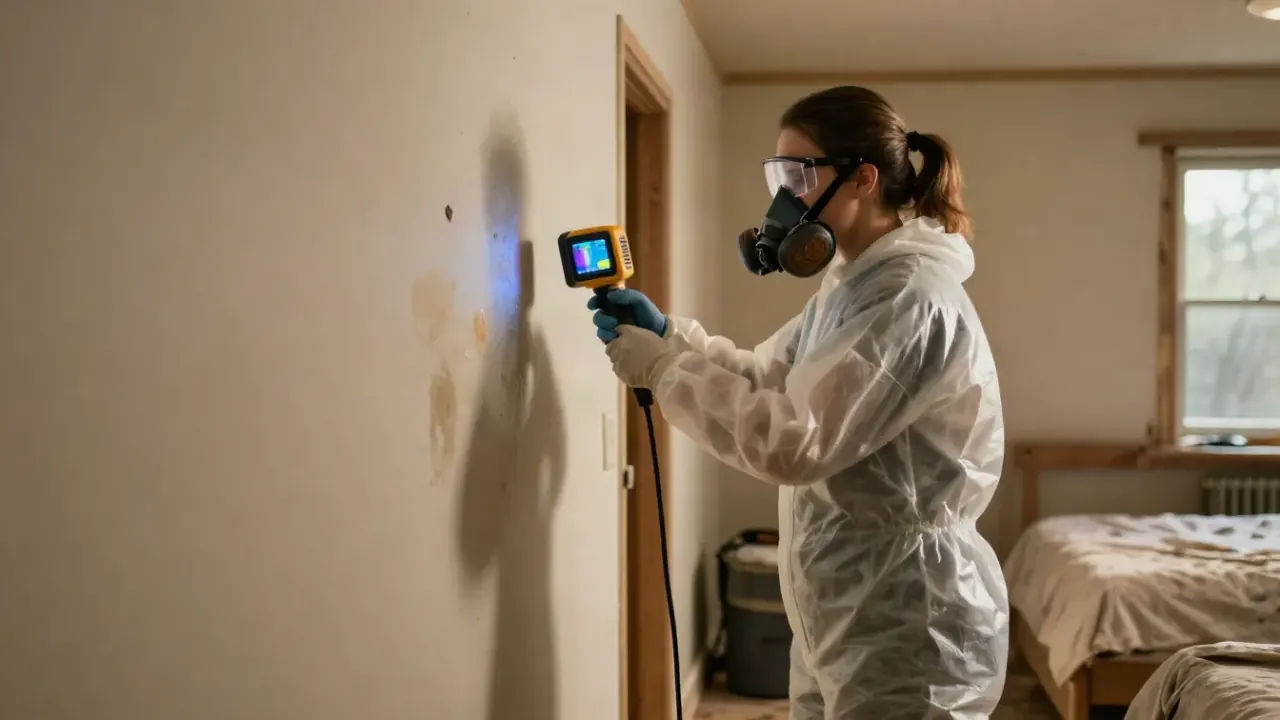
We come back daily to log readings, refill or drain equipment, and reposition air movers as the wet zones shrink. Most structural drying richmond TX jobs run three to five days. You get a text before each visit so you are not caught off guard.
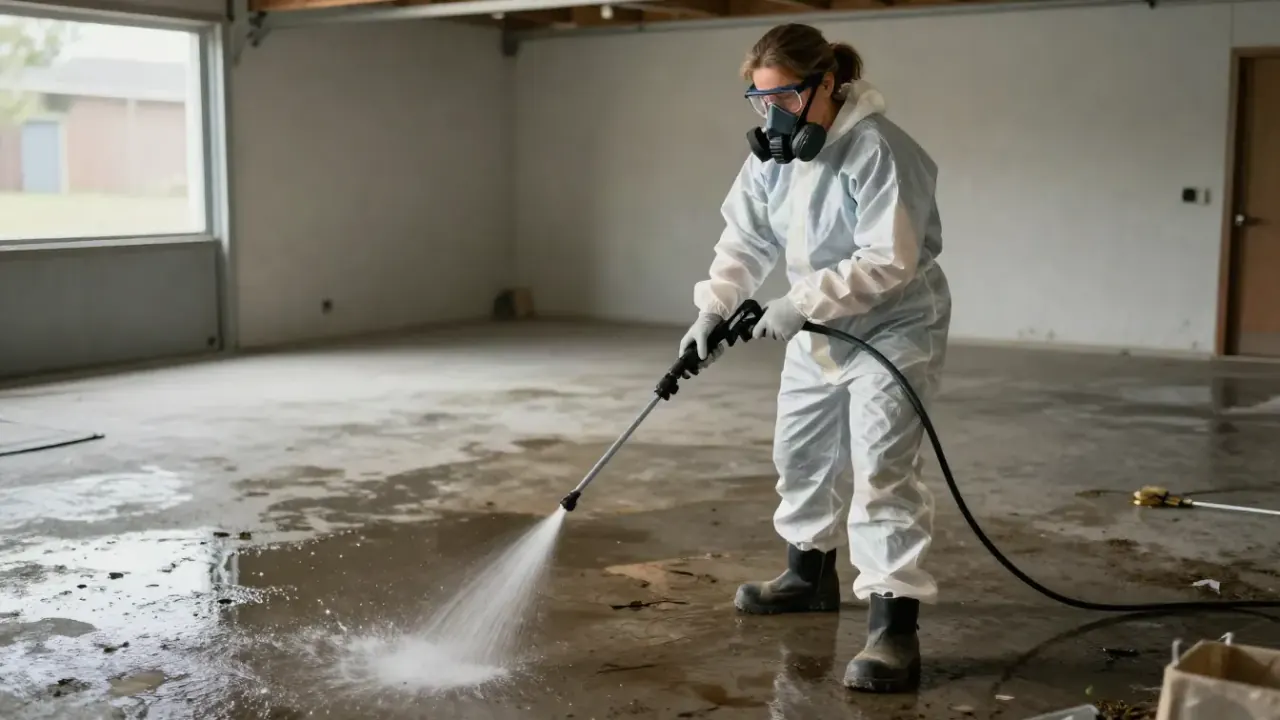
When materials hit dry standard, we take final readings, photograph everything, and remove the equipment. You get a written drying report with the daily numbers. If repairs like drywall or paint are needed, we tell you what to fix and what can wait.
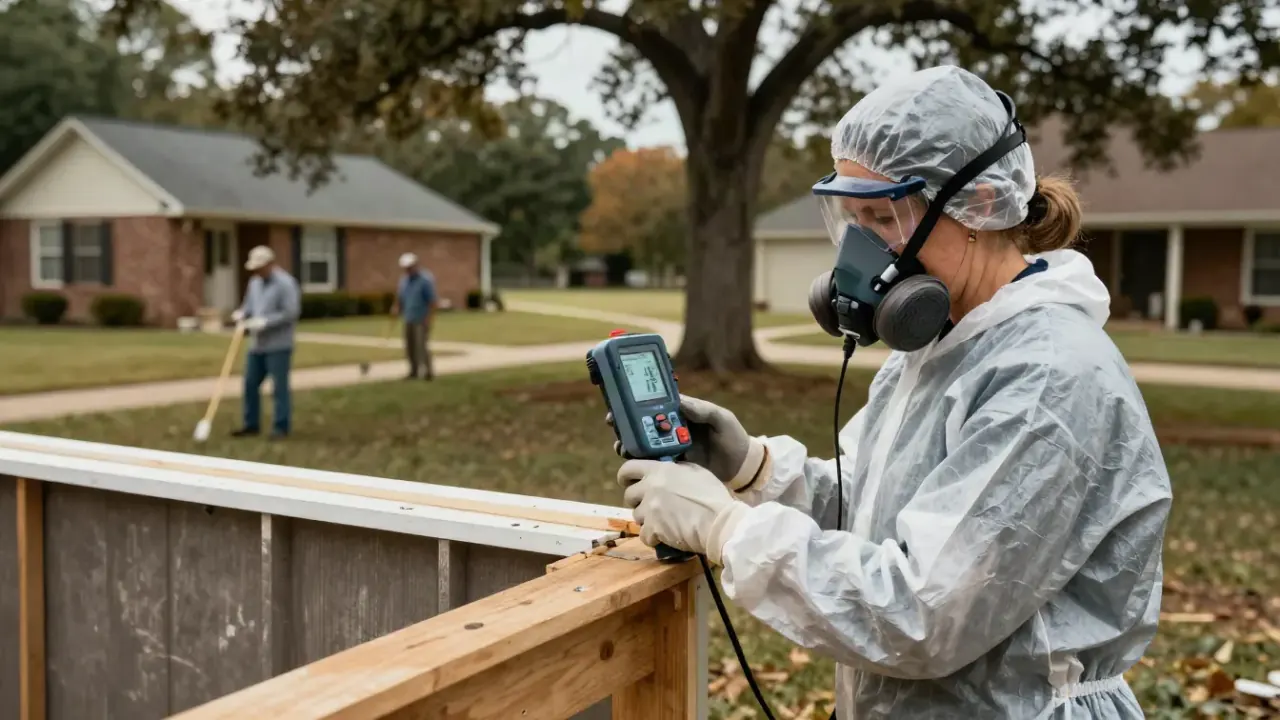
Move across a circle, or focus it and press Enter, for an illustrative thermal view of the photograph.
Find cold, wet zones behind tile, drywall and flooring without cutting anything open. This is how we map the job before setting equipment.
Measure moisture content inside drywall, framing and subfloor. We take readings at the same points daily to prove the material is drying.
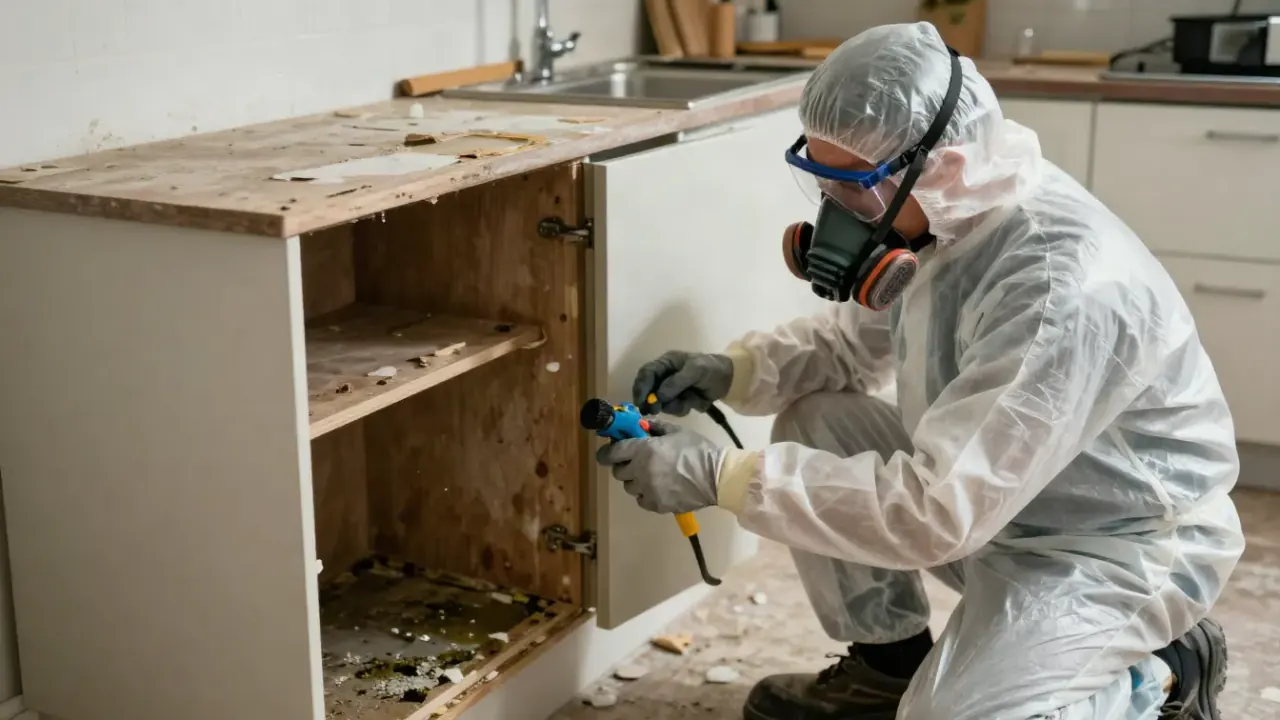
Look inside wall cavities and under cabinets to confirm how far water traveled and whether insulation is wet.
Keep air moving across wet surfaces so moisture evaporates into the room air instead of sitting in the material.
Pull that moisture out of the air so it does not settle back into the drywall. Sized to the cubic footage of the affected area.
Thermal views are illustrative, generated from the photographs.
Remove standing water before drying starts. Skipping this step is why some jobs take twice as long.
The industry standard for water damage drying. It sets how we classify the water, measure the affected area and decide when materials have reached dry standard.
Small ports drilled into the wall let warm dry air circulate inside the cavity while dehumidifiers pull moisture from the room. This dries most walls without full demolition.
We record readings at the same points every visit. The trend tells us whether the setup is working or needs to change, and it gives your adjuster a clear record.
Where water sat long enough to raise mold risk, we treat framing and cavity surfaces with antimicrobial solutions before anything gets closed up.
A washing machine supply line bursts overnight and water spreads across the laundry room and hallway.
We shut off the line if it is still running, extract standing water, and map how far it traveled under the tile and into the adjacent wall. Air movers and dehumidifiers go in the same day.
Outcome: Most laundry-room losses dry in three to four days. You get a written report for your carrier and a clear list of any flooring that needs replacement.
A roof leak during a storm soaks attic insulation and stains the ceiling below in Harvest Green.
We inspect the attic with thermal imaging, remove saturated insulation, and dry the ceiling and framing from above and below. Small ports let us dry the ceiling cavity without tearing out the whole sheet.
Outcome: The ceiling usually dries in place. Insulation gets replaced, and you avoid a full ceiling replacement in most cases.
A slab leak is discovered during a plumbing repair and the flooring is already cupping.
We coordinate with your plumber, then dry the affected flooring and slab edge. Moisture readings at the same points each day show whether the floor is recovering or needs replacement.
Outcome: Some flooring recovers and some does not. Either way you know within four days, and the documentation supports the insurance decision.
A toilet supply line fails in a rental unit and the tenant calls after a weekend away.
We extract, dry and document the whole unit, then send the report to the property manager and the carrier. Daily monitoring keeps the tenant informed without them having to chase us.
Outcome: The unit is dry and documented, and the owner has what the adjuster needs without a second inspection.
Richmond sits on clay-heavy soil with a high water table, and that changes how water behaves in a home. A slab leak here can push moisture up through flooring for weeks before it shows. Our spring and fall storms drop heavy rain fast, and low-lying streets near the Brazos bottom flood quickly. The housing stock ranges from older homes with pier-and-beam foundations to newer builds in Aliana and Harvest Green with tight wall assemblies that hold moisture longer. If you need professional structural drying richmond texas done right, the local conditions matter as much as the equipment.
Before: A supply line under the sink let go overnight. Water ran across the cabinet floor, under the tile and into the hallway wall. The wall cavity read 27 percent moisture content and the cabinet toe kick was soaked.
After: We extracted standing water, dried the cabinet and wall cavity with air movers and a dehumidifier, and logged readings daily. By day four the wall was at 13 percent and the equipment came out. No cabinet replacement was needed.
Check supply lines under sinks every six months and replace braided lines older than five years.
Before: A storm drove water through a roof valley and soaked the attic insulation. The ceiling below showed a brown stain and the drywall read 22 percent. The homeowner expected a full ceiling replacement.
After: We removed the wet insulation, dried the ceiling cavity through small ports, and replaced only one section of drywall. Final readings came in under 15 percent on day five. The ceiling paint matched after a single coat.
Have the roof inspected each spring before storm season.
Before: A slab leak pushed moisture up through vinyl plank in a rental unit. The plank was cupping and the baseboards read 24 percent. The tenant had been away for a week and the moisture had spread into two rooms.
After: We mapped the wet zone with thermal imaging, dried the flooring and slab edge over four days, and documented everything for the owner's carrier. The claim was approved without a second inspection. One room's plank was replaced.
Watch for warm spots on the floor and unexplained jumps in your water bill. Both point to a slab leak before the flooring shows damage.
Most of our calls start with the same few problems. Here is what they look like and what happens if you leave them alone.
A dry structure, documented readings and no guesswork about what happens next.
We roll out within hours of your call across Fort Bend County. Every hour wet drywall sits, the odds of mold growth after water damage climb. Getting air movers and dehumidifiers running on day one is the single biggest factor in how the job ends.
Many wet walls can be dried in place. We use boroscopes to look inside the cavity, then inject warm dry air through small ports instead of tearing out full sheets. That saves you drywall, paint and a week of living in a construction zone.
We log moisture readings daily and show you the drop. A typical wet wall starts above 25 percent moisture content and needs to come under 16 percent before we pull equipment. You get the numbers, not just a promise.
Photos, meter logs and a written drying report go to your adjuster. That paperwork is often the difference between a covered claim and a fight. We have been documenting structural drying richmond TX jobs since 2021 and know what carriers ask for.
What a written scope covers and what shapes it. Prices are set by the business after the first look.
Included
Depends on
Clear records you can keep and share.
Daily moisture readings at fixed points
Before and after images of wet areas
What was dried and what was removed
Dry standard confirmed and equipment removed
How we dry a Richmond home depends on what kind of water caused the damage.
Supply lines and rain
Appliance and toilet overflow
Sewage and ground flooding
A list like this tells people straight away whether you cover their street. Not listed? Call and ask: it only takes a minute.
Based in richmond and covering the places around it. Pick one for local details.
A single small bathroom can land near the low end. A flooded first floor with wet drywall and insulation pushes toward the top. We give you the number before we start.
Three to five days is typical for a Richmond home. A small leak caught early can finish in 48 to 72 hours. Slab leaks, storm flooding and wet insulation take longer because the water traveled further. We check readings daily and do not pull equipment until the materials hit dry standard.
Yes, if the leak reached drywall, flooring, insulation or framing. A small drip under a sink that stayed on the cabinet floor may only need cleanup. Once moisture gets into a wall cavity or under flooring, it stays there. A moisture meter reading above 16 percent means the material needs drying, not just airing out.
Often, yes. We use boroscopes to inspect inside the cavity, then drill small ports and inject warm dry air while dehumidifiers pull moisture from the room. This works on most wet drywall with intact paper facing. If the drywall is sagging, crumbled or growing mold, that section comes out and gets replaced.
Other services from the same team.
Water does not wait, and neither should you. Call us and we will walk you through what to do before we arrive.
If water is still coming in, call us first at +1 832-225-4606. For non-emergency questions, email info@waterrestorationsexpert.com and we will get back to you the same business day.