For homes
We inspect your home, find the water source, and explain what has to come out. You get readings and photos before any wall is opened.
- Musty smell in a hallway
- Stain spreading on a ceiling
- Soft baseboards after a leak
When mold shows up after a slab leak or a roof leak, mold remediation richmond TX crews handle the containment, removal, and drying in one visit. We serve homeowners and property managers across Fort Bend County, from Aliana to Harvest Green. Call and we will tell you what we see, what it costs, and how long it takes.
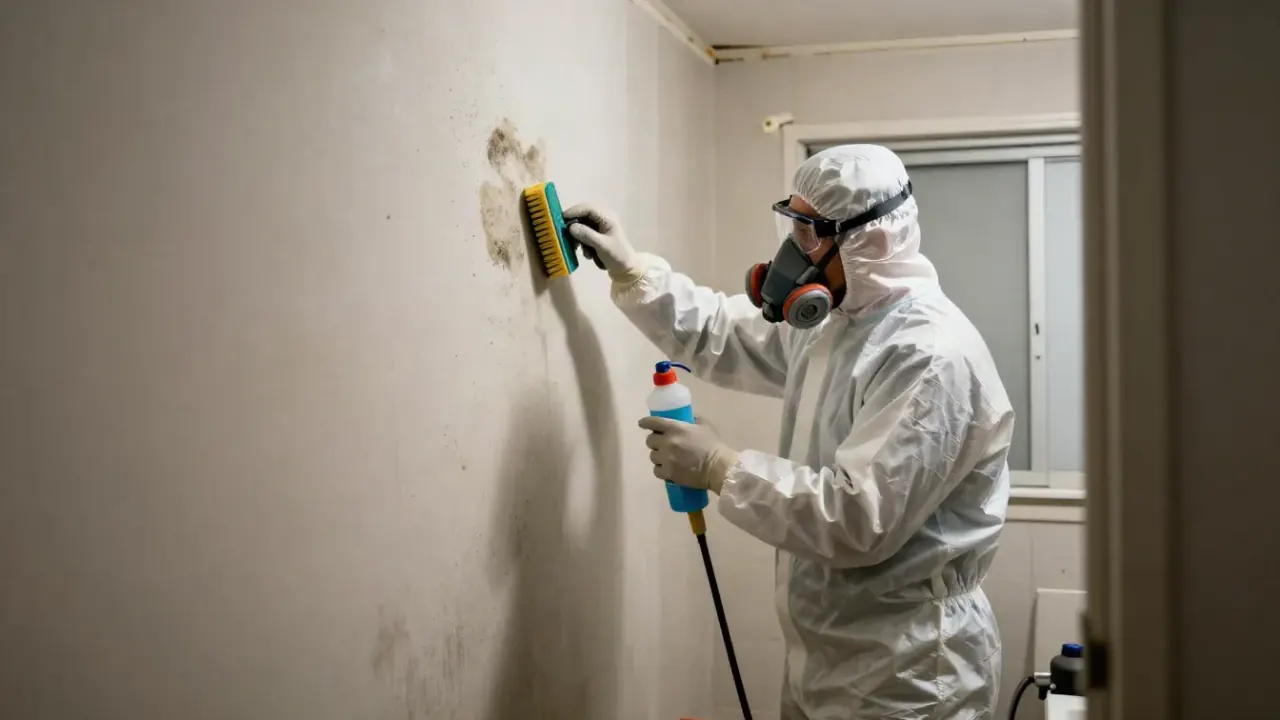 Meter every wallContain firstLog daily readings
Every job starts with an inspection and a written scope. Here is what is standard on our mold remediation richmond TX jobs, and what we handle as an add-on when the damage calls for it.
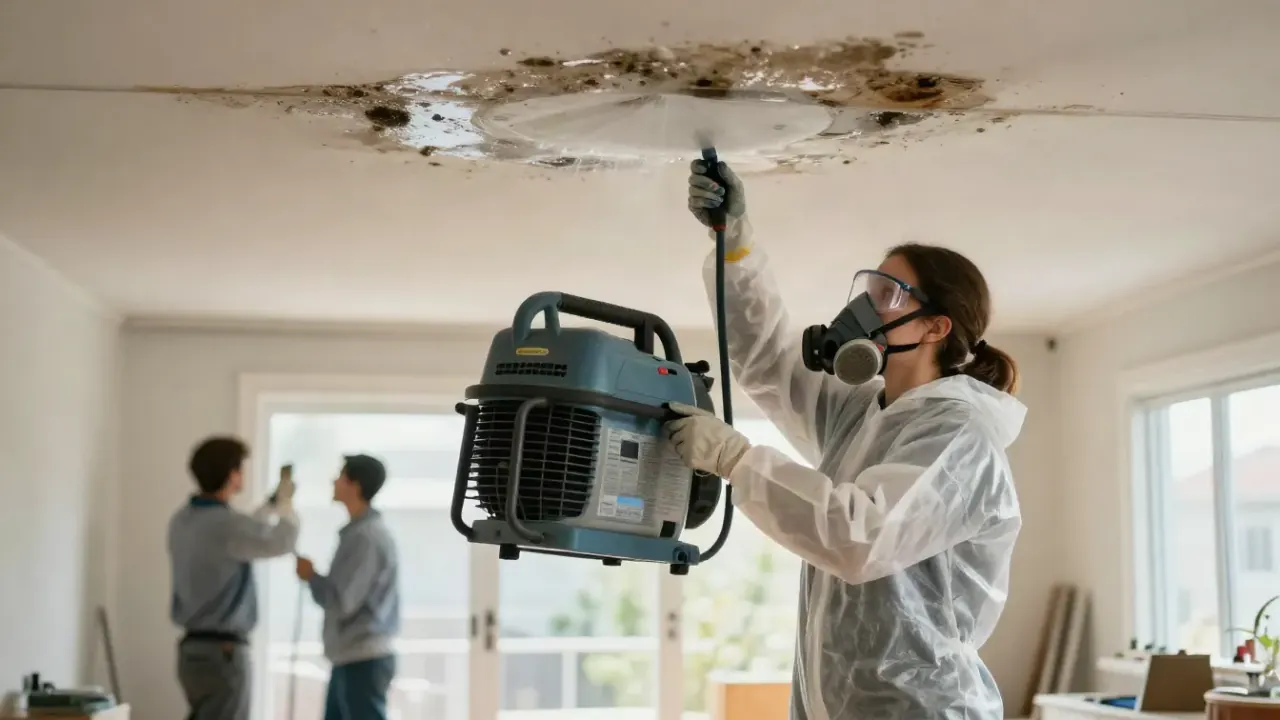
We meter every wall in the affected area and check inside cavities with a boroscope. You get a clear picture of where the water is and how far the mold has spread before any work starts.
Vapor barriers and negative air machines keep spores out of the rest of your home. We seal HVAC returns in the work zone so the system does not pull mold into other rooms.
Drywall, insulation, and baseboards with visible growth come out and get bagged for disposal. We cut clean edges so your repair crew has an easy patch to work with later.
After removal, we apply antimicrobial solutions to the exposed framing and studs. This is not a cover-up. It is a step we take only after the surface is clean and dry.
Air movers and dehumidifiers run until readings hit a dry standard. We log the numbers daily and take final photos before we pull equipment, so you have proof the cavity is dry.
The approach is the same for a home and a business. What changes is the access, the schedule and who needs the paperwork.
We inspect your home, find the water source, and explain what has to come out. You get readings and photos before any wall is opened.
We work around your hours, contain the affected area, and keep the rest of the building open. You get documentation for your records and your carrier.
A plain-language look at what mold remediation richmond tx involves and when it is needed.
See how it worksMold remediation richmond TX is the process of containing, removing, and drying mold-damaged materials so spores stop spreading through your home. We start with moisture meters and thermal imaging cameras to find the wet source, because mold will return in weeks if the water is still there. Then we seal the area with vapor barriers, run air movers and dehumidifiers, and remove porous materials like drywall and insulation that cannot be saved.
Most calls we take in richmond start with a slab leak, a burst pipe, or a roof leak that sat too long. Texas humidity does the rest. If you search mold removal services near me richmond and find a crew that skips the moisture mapping, walk away. We test with a boroscope inside walls, check the HVAC pan, and confirm the source before we quote anything.
Mold is a water problem first. Dry the source and the mold stops coming back.
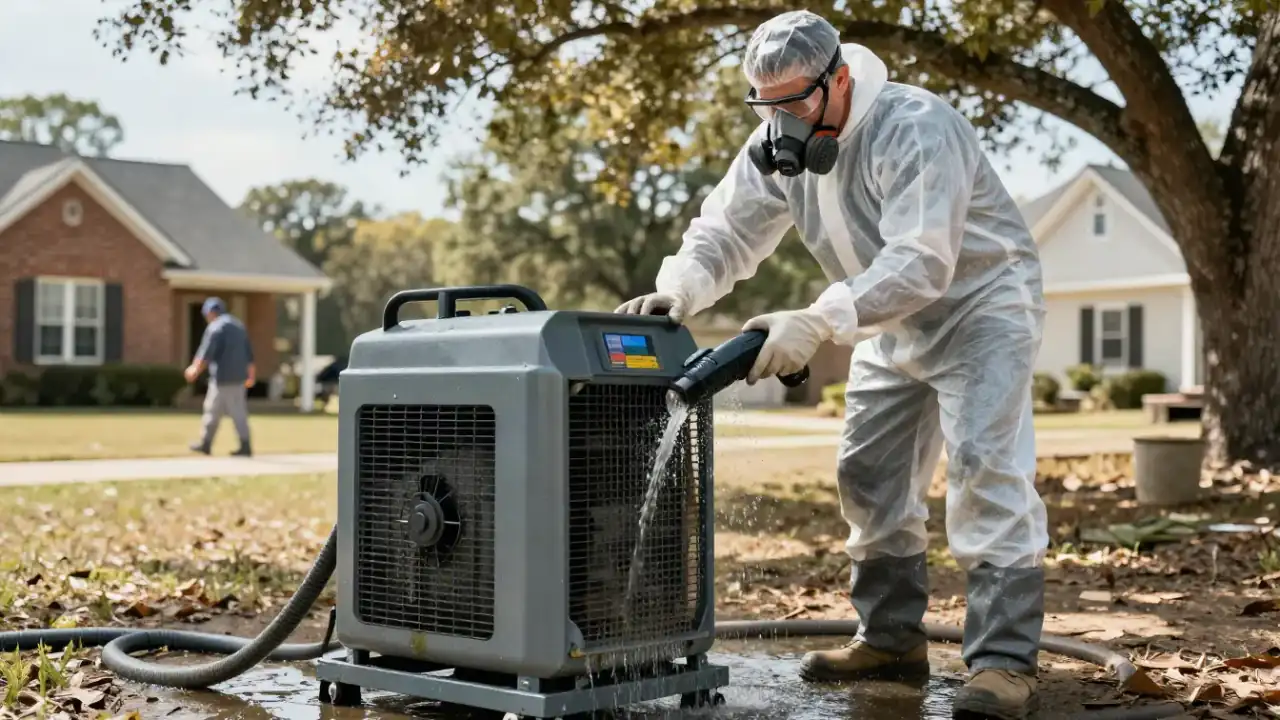
Every job follows the same five steps, whether it is a small bathroom ceiling or a whole first floor after a flood. Here is what you will see from us.
We walk the space with moisture meters and a thermal imaging camera, then check inside walls with a boroscope. You get a plain explanation of where the water came from and how far it traveled. This visit takes about 45 minutes.
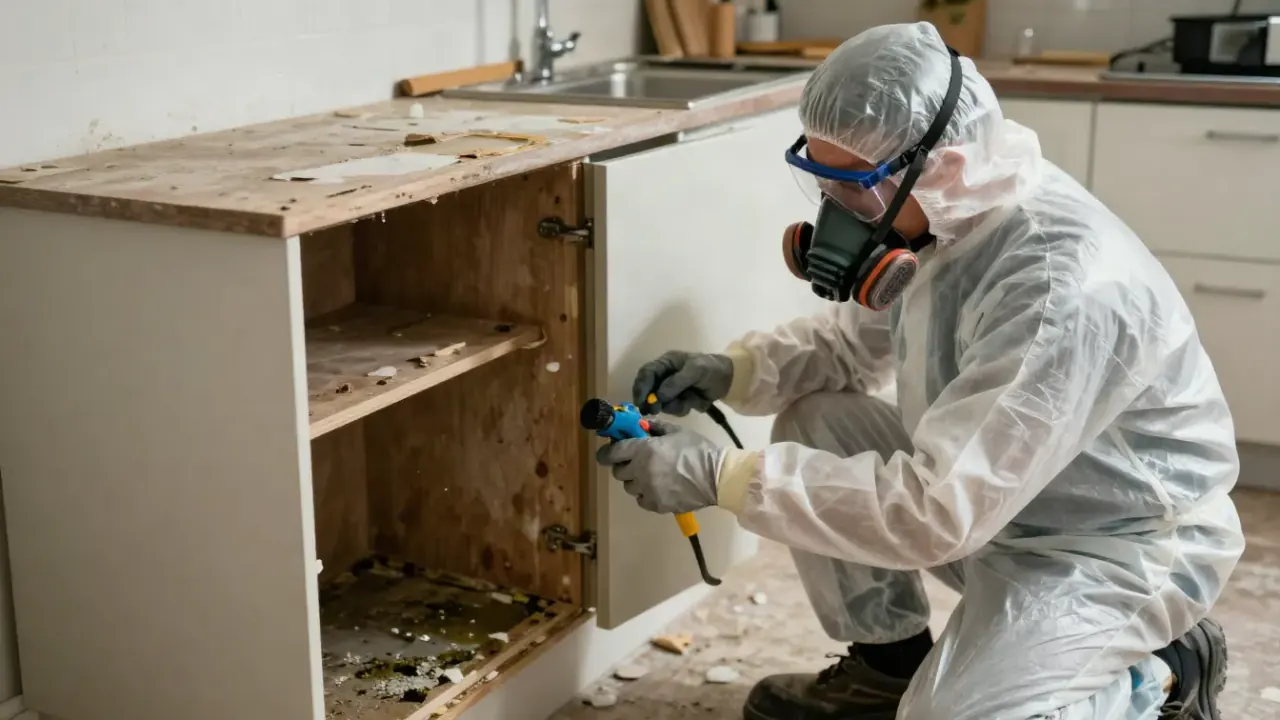
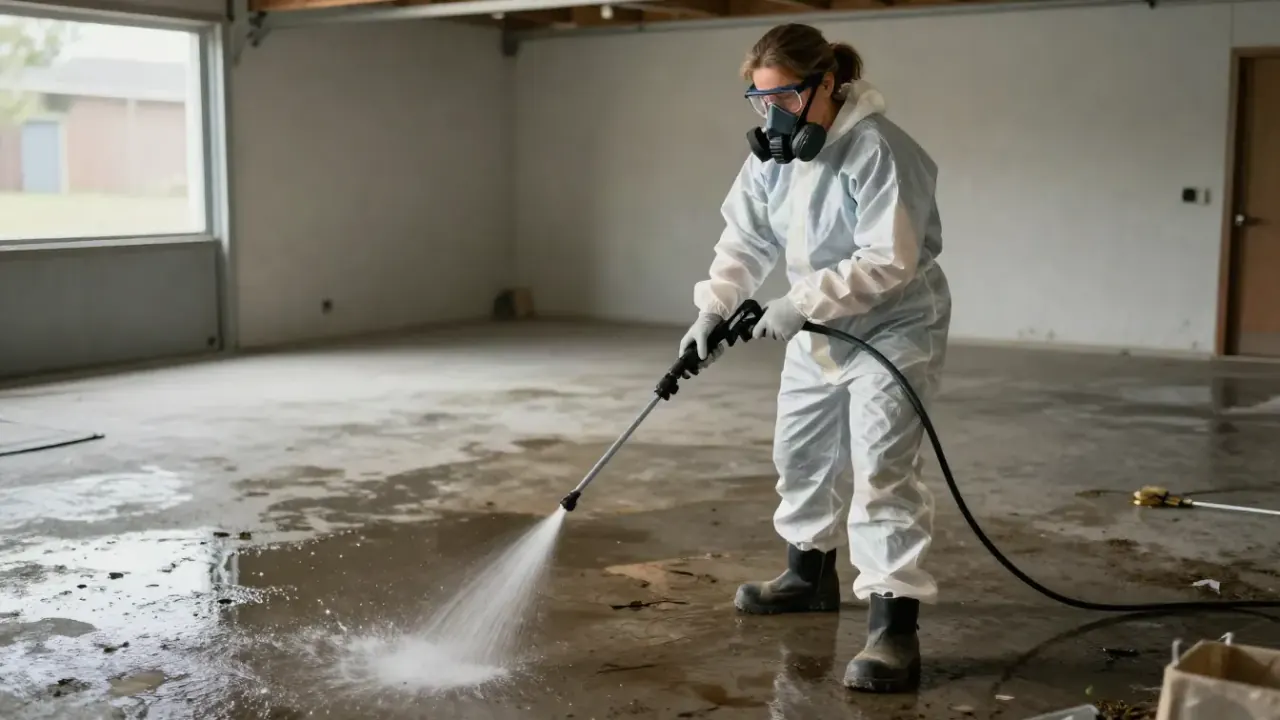
We hang vapor barriers and set negative air pressure so spores stay in one room. Furniture gets moved or covered, and we protect flooring on the path to the door. Setup usually takes one to two hours.
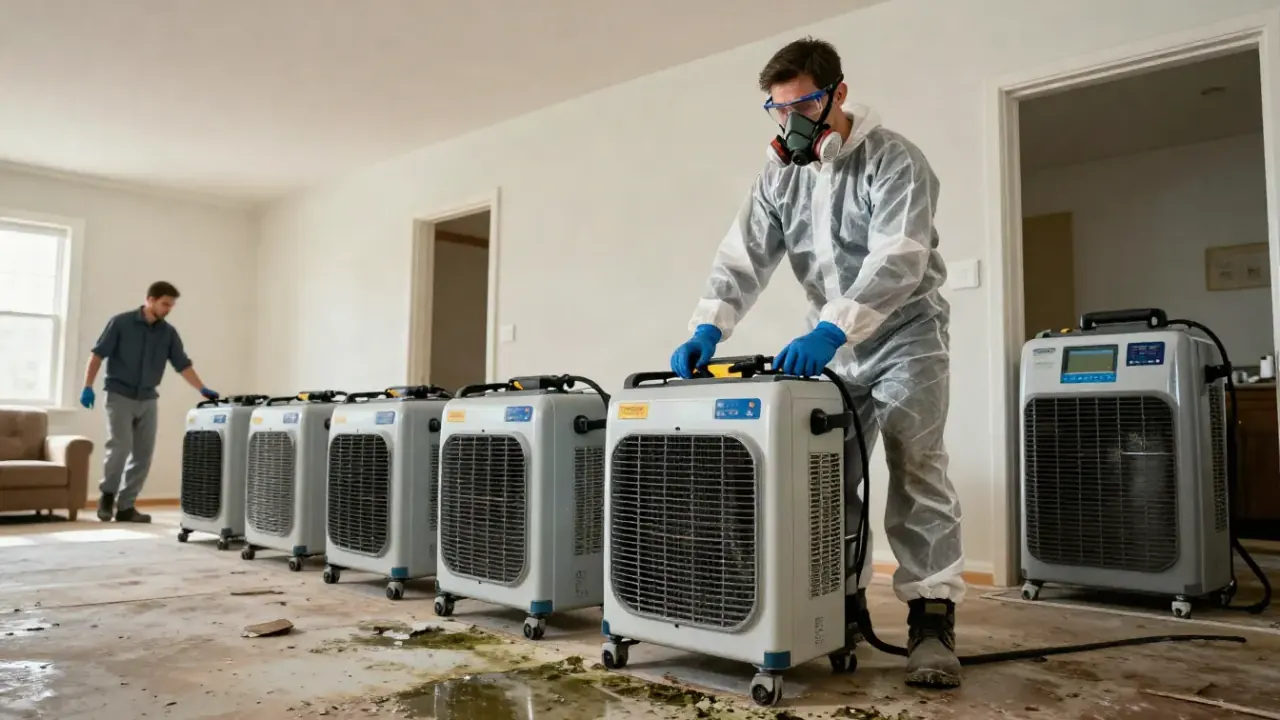
Drywall, insulation, and baseboards that show mold growth come out and get bagged. We cut clean lines so the repair patch is simple later. A typical bedroom wall takes half a day.
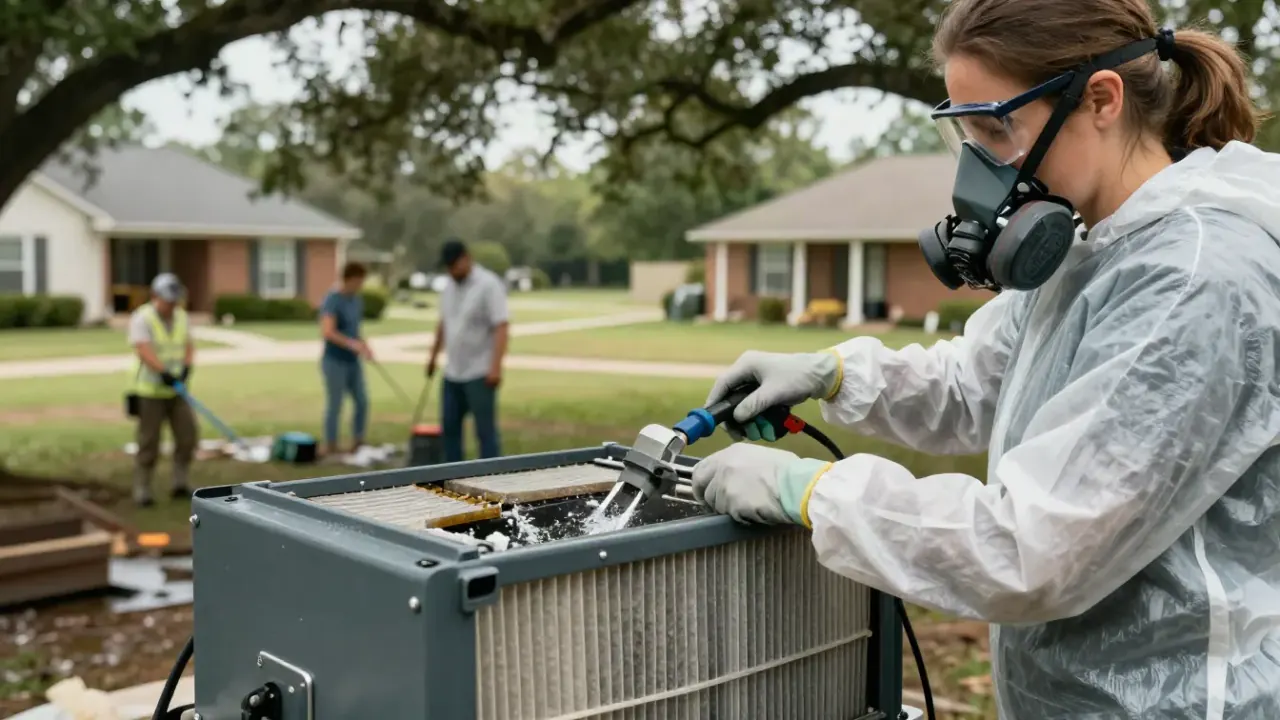
Air movers and dehumidifiers run until moisture readings match a dry standard. We apply antimicrobial solutions to the framing, then verify with a meter before we pull equipment. Most rooms dry in three to five days.
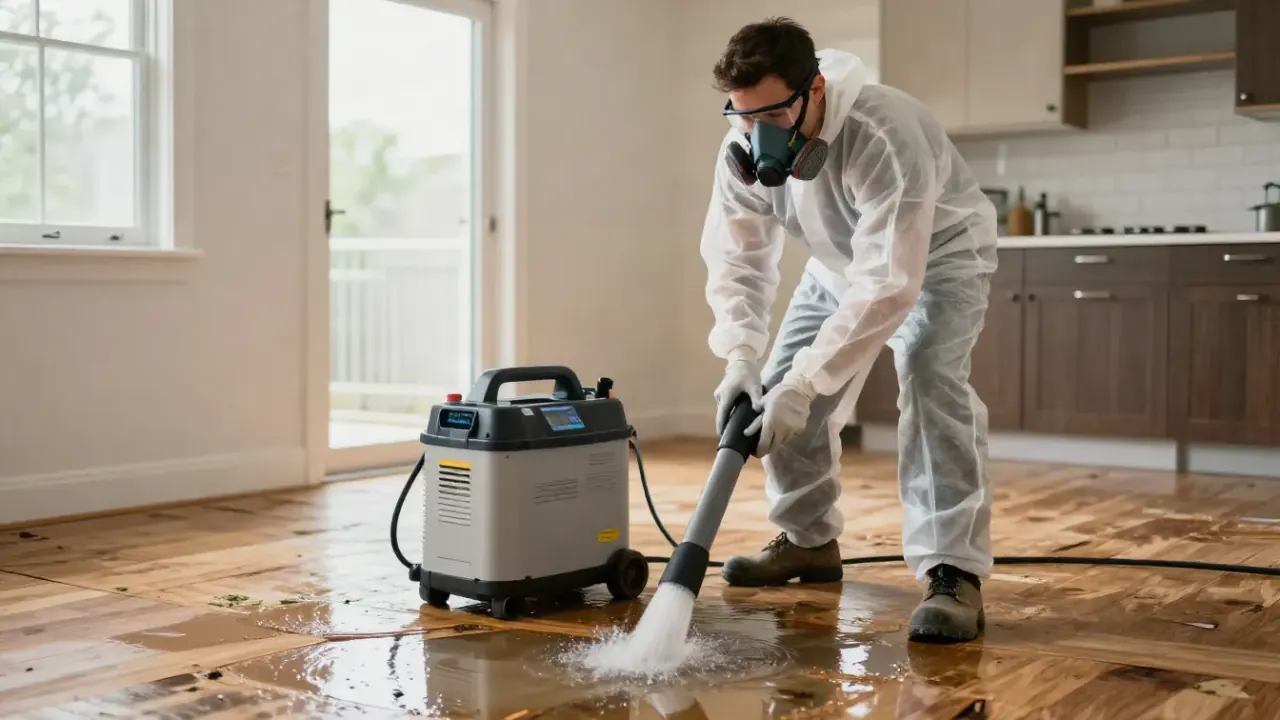
We take final moisture readings, photograph the framing, and walk you through what was removed and what needs rebuilding. You get the drying log and photos the same day we pull equipment.
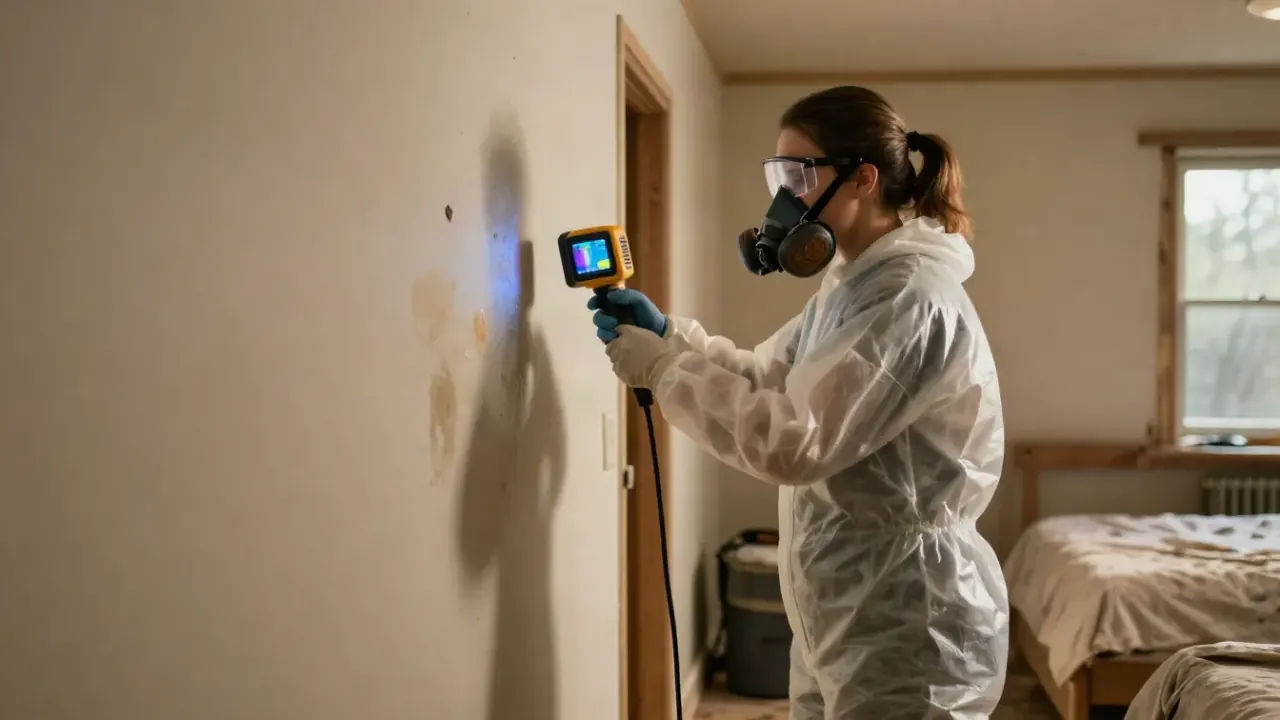
Move across a circle, or focus it and press Enter, for an illustrative thermal view of the photograph.
Pin and pinless meters read moisture inside drywall, framing, and subfloor. We use them before, during, and after drying to confirm the structure is actually dry.
Infrared cameras show temperature differences that reveal hidden water behind walls and under floors. They help us find the leak path without opening every wall.
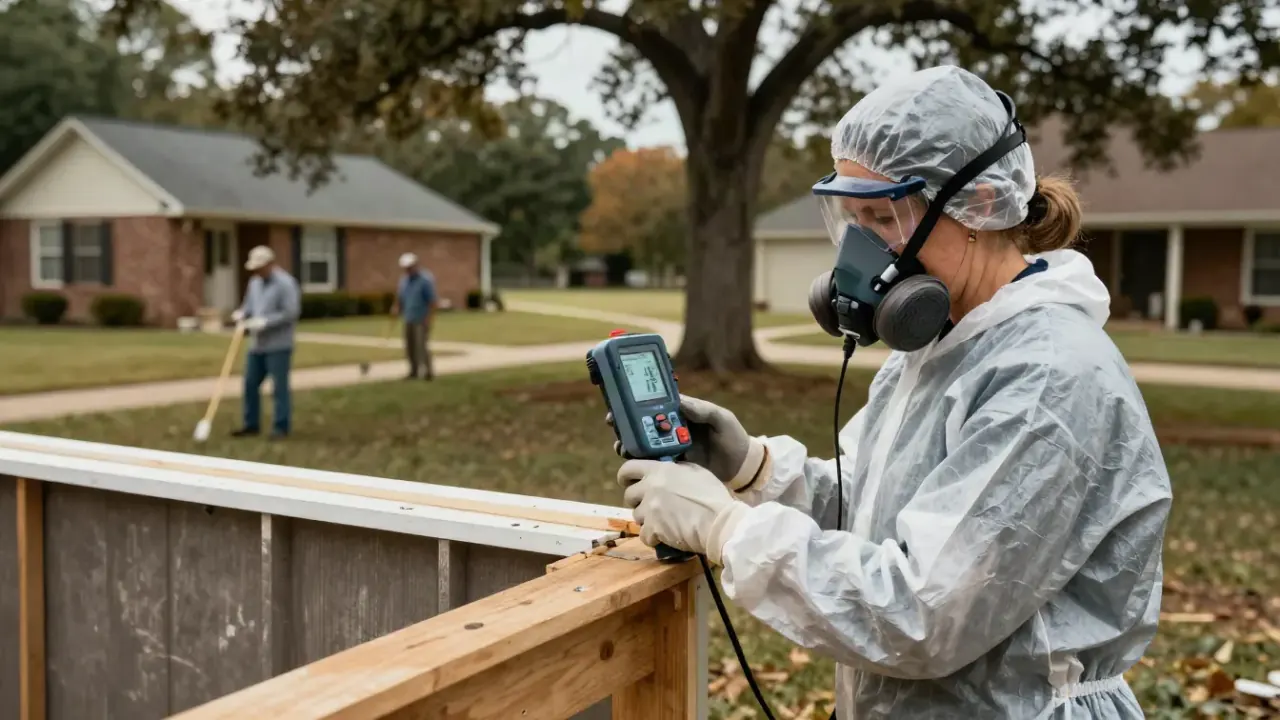
A boroscope goes through a small hole to show us the back side of drywall and inside wall cavities. We confirm mold growth before we commit to a removal scope.
These dry the structure after removal. We size the equipment to the room and run it until moisture readings hit a dry standard, usually three to five days.
When we suspect a slab leak, a hydrostatic test confirms it. Sump pumps move standing water out of a crawlspace or lower level so drying can start.
Thermal views are illustrative, generated from the photographs.
This is the standard we follow for containment, removal, and cleaning. It sets the rules for negative air, disposal, and when a space is considered clean enough to rebuild.
S500 governs how we dry the structure after water damage. It is the reason we log moisture readings daily instead of guessing when a wall is dry.
We seal the work area with vapor barriers and run a negative air machine so air flows into the containment, not out into your home. This keeps spores from spreading during removal.
We apply antimicrobial solutions to clean framing only after the surface is dry. Treating a wet wall does nothing, so drying always comes first.
You had a pipe burst over the weekend and the wall still smells musty a week later.
We inspect with moisture meters and a boroscope, confirm whether mold has started behind the drywall, and contain the area if it has. If the wall is still wet, we dry it first and treat after.
Outcome: You know within an hour whether it is mold or just damp drywall, and you get a plan either way.
A roof leak during a storm left a brown stain spreading across your ceiling.
We check the attic side of the ceiling, pull any wet insulation, and remove ceiling drywall that shows growth. Air movers dry the framing before we treat it.
Outcome: The ceiling cavity is dry and treated, so your repair crew can patch without worrying about what is behind it.
You are buying a home in Harvest Green and the inspection report flags mold in the crawlspace.
We do a same-day mold inspection richmond TX visit, meter the area, and give you a written scope you can use in negotiations. If you close, we can schedule the work before you move in.
Outcome: You get a real number for remediation instead of a vague estimate, which helps you negotiate or budget.
Your tenant in a 77469 rental reports a musty smell and a soft spot in the bathroom floor.
We inspect, find the water source, and handle containment and removal in one trip. You get photos and a drying log for your records and your insurance claim.
Outcome: The unit is dry and documented, so you can re-rent it without a mold question hanging over the lease.
Richmond sits in Fort Bend County, where the summer humidity hangs in the 70s and 80s for months and afternoon storms dump water fast. That combination means a slow slab leak or a roof leak can grow mold in under a week, not a month. We see it most in homes built on expansive clay soils, where foundation movement cracks supply lines under the slab.
Newer builds in Aliana and Harvest Green tend to have tighter envelopes, which holds moisture inside after a leak instead of letting it dry out. Older homes near the Brazos deal with storm flooding and roof leaks after heavy rain. If you are searching mold remediation richmond TX near me after a storm, call early. The longer water sits, the more material comes out.
Before: A slow slab leak soaked the baseboards and bottom 18 inches of drywall in a 77406 kitchen. Mold covered the back side of the drywall, and the smell reached the living room.
After: We removed 12 feet of drywall and baseboard, dried the framing for four days, and treated the studs. Final moisture readings matched a dry standard on day five.
Keep an eye on the slab for new cracks and check under the sink monthly. Fix any supply line drip within 24 hours.
Before: A roof leak during a spring storm left a two-foot brown stain on a Harvest Green hallway ceiling. Insulation above it was wet and mold had started on the attic side of the drywall.
After: We pulled the wet ceiling section and insulation, dried the attic framing for three days, and treated the wood. The repair crew patched a clean, dry opening.
Have the roof inspected each spring before storm season and replace worn flashing. Check the attic after any heavy rain.
Before: A sewage backup in a 77469 rental soaked the bathroom floor and the bottom of two walls. Category 3 water meant everything porous had to come out.
After: We removed the vinyl flooring, vanity, and lower drywall, treated the framing, and dried the cavity in four days. The unit passed a moisture check before rebuild.
Have the main line jetted every 18 to 24 months and install a backwater valve if the home is on a low lot.
Most mold calls come down to one of a handful of water problems. Here is what we see most often and how we handle each one.
A dry structure, documented readings, and a clear rebuild plan.
We schedule same-day mold inspection richmond TX visits in most cases, so you are not staring at a growing stain for a week. A technician walks the space, meters the walls, and tells you what is wet and what is not.
We build negative-air containment with vapor barriers before we touch a single affected panel. That keeps spores out of your kitchen, your kids' rooms, and your HVAC return while we work.
Antimicrobial solutions only work on a dry surface. We run Dri-Eaz and Phoenix Restoration Equipment dehumidifiers until moisture readings hit normal, which usually takes three to five days for a typical wall cavity.
You get a written scope and a price before we start. No surprise line items for containment, disposal, or a second drying day. If the job changes, we tell you why and what it adds.
What a written scope covers and what shapes it. Prices are set by the business after the first look.
Included
Depends on
Clear records you can keep and share.
Daily moisture readings
Framing before rebuild
What was removed
Readings at completion
Not every stain is mold, and not every mold job needs the same scope.
Discoloration on a dry surface
Mold feeding on wet material
Mold behind drywall or under floor
A list like this tells people straight away whether you cover their street. Not listed? Call and ask: it only takes a minute.
Based in richmond and covering the places around it. Pick one for local details.
A single bathroom ceiling is on the low end. A whole first floor after a flood sits at the top. Containment size, material removal, and drying days drive the number.
Yes, Stachybotrys and other black molds can trigger breathing problems, headaches, and allergy symptoms, especially in kids and older adults. The risk goes up when growth sits behind drywall or in an HVAC system where spores circulate. We contain the area before removal so spores do not spread during the job.
A musty smell, warped baseboards, or a stain that keeps growing after a leak are the usual signs. If you had water sitting more than 24 to 48 hours, assume mold is starting. A same-day mold inspection richmond TX visit with moisture meters confirms it in under an hour.
Most policies cover mold that results from a sudden event like a burst pipe or appliance overflow, but not from long-term neglect. We document the source, photograph the damage, and provide the drying log your adjuster needs. Call your carrier early, because most policies require you to report the loss quickly.
Other services from the same team.
If you can smell it or see it, it is already spreading. Call us and we will schedule a same-day inspection, meter the walls, and give you a written scope with a price.
If water is still coming in, call us first at +1 832-225-4606. For non-emergency questions, email info@waterrestorationsexpert.com and we will get back to you the same business day.