For homes
We handle floods in houses, apartments, and condos. We work around your family and pets to get the water out fast.
- Burst pipe under sink
- Storm water through door
- Sewage backup in bathroom
When water is rising in your home, flood damage restoration richmond TX means getting the water out, the structure dry, and the mold stopped before it spreads. We handle flooded house cleanup richmond texas for homeowners and businesses across Fort Bend County, from slab leaks to storm flooding. Call +1 832-225-4606 and we roll a truck today.
 Check moistureExtract waterDry structure
Every flood job is different, but most full-service flood damage restoration richmond TX projects include the items below. We scope each job after inspection so you know exactly what is covered before we start.
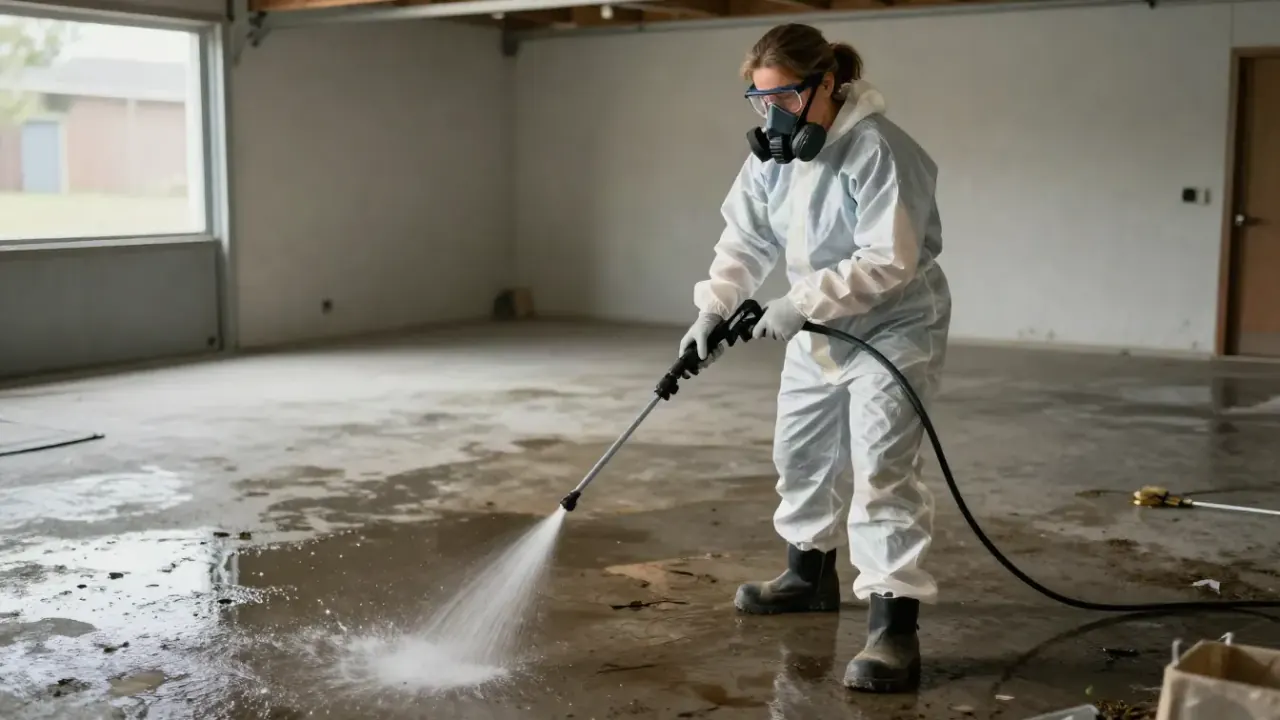
Truck-mounted extraction units remove standing water from floors, carpets, and low areas. This is the first and most urgent step in any flood cleanup, and it typically takes two to six hours depending on water volume.
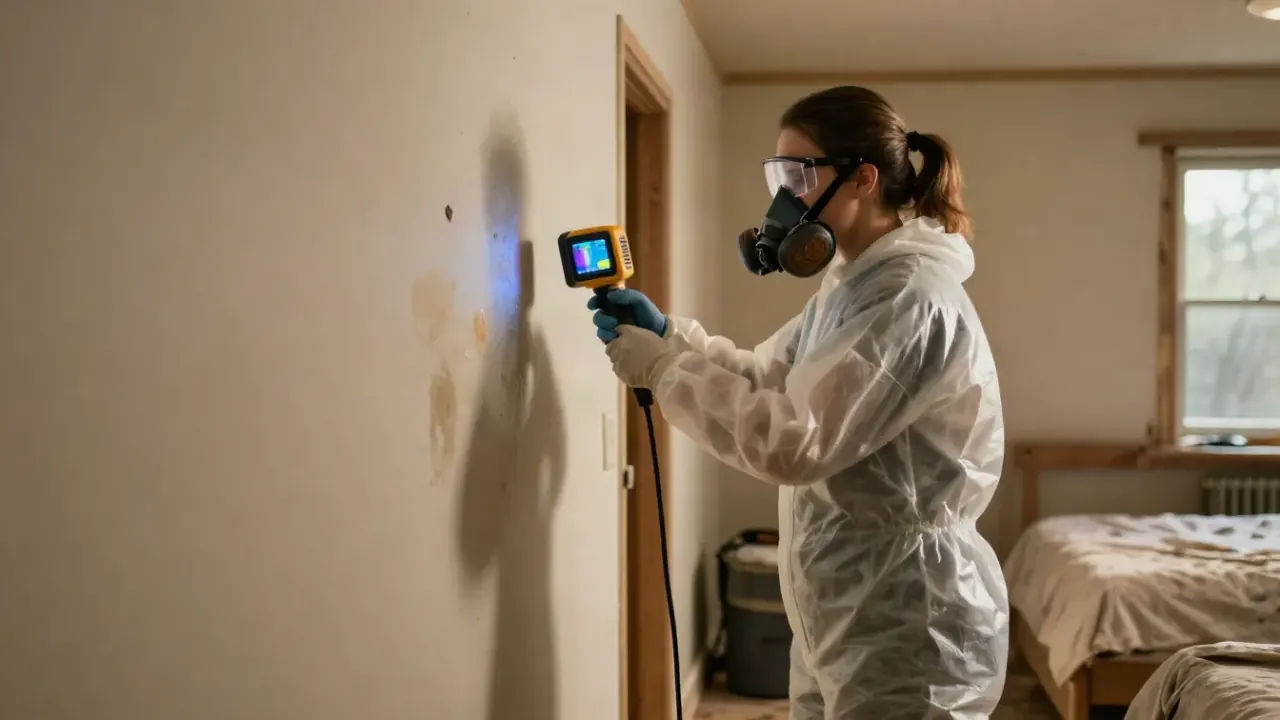
We use moisture meters, thermal imaging cameras, and boroscopes to find hidden water behind walls and under floors. This inspection determines the scope of drying and identifies any areas that need demolition.
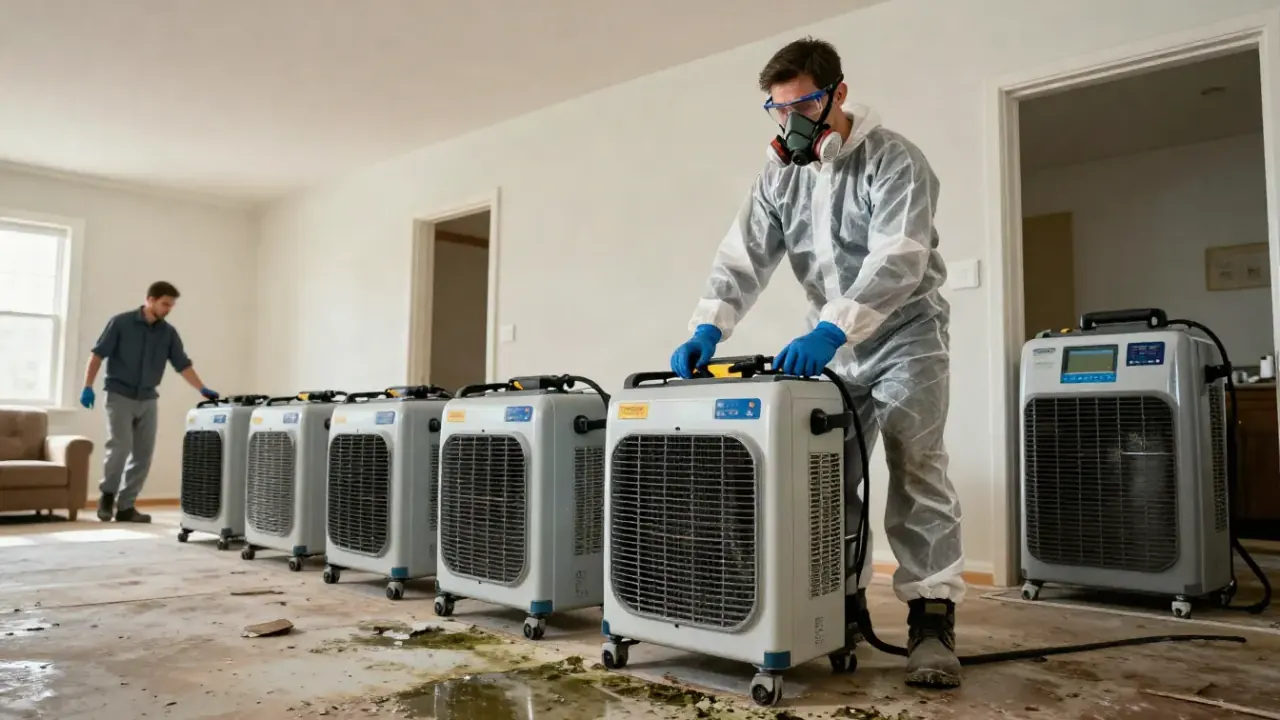
Air movers and dehumidifiers are placed to dry framing, drywall, and subfloors. We calculate equipment needs based on square footage and material types, then monitor daily until readings hit dry standard.
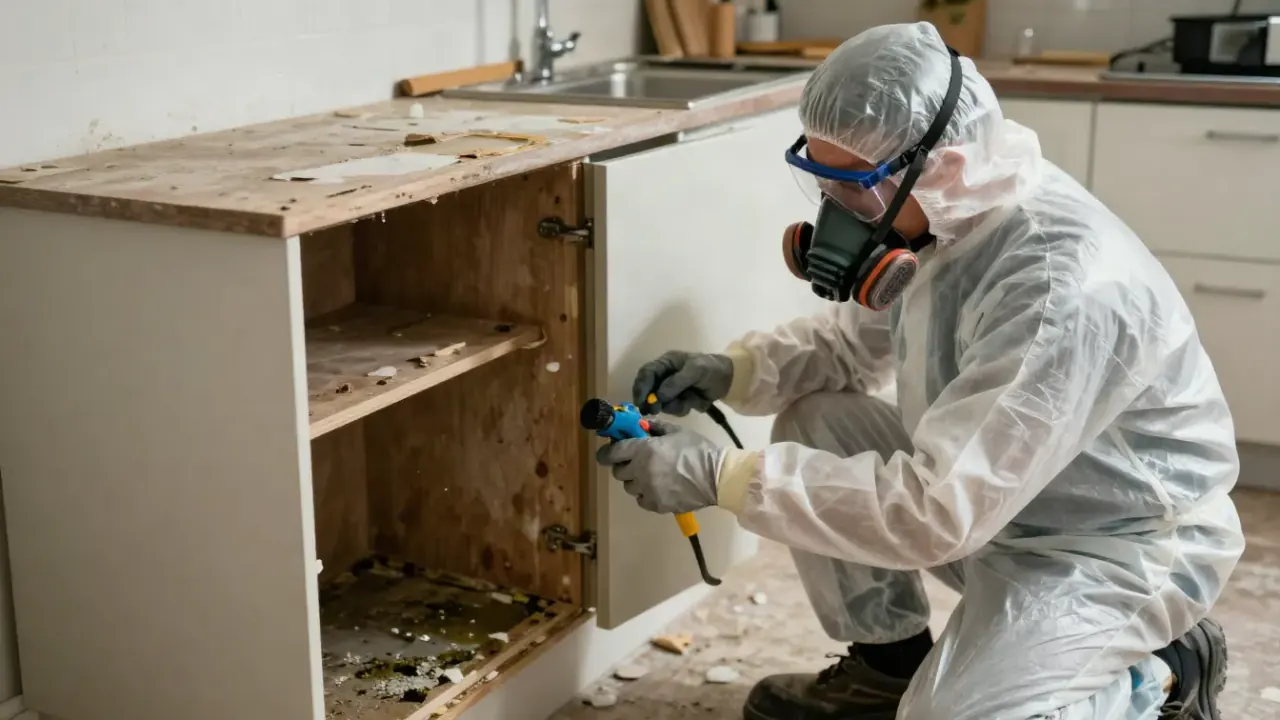
After extraction, we apply antimicrobial solutions to wet surfaces to inhibit mold growth. This is standard on every flood job and is especially important when water has been sitting for more than 24 hours.
We check moisture readings every day and adjust equipment as needed. You get a photo log and drying report that documents the entire process for your insurance claim.
Before we remove equipment, we take final moisture readings and compare them to our baseline. You receive a completion report showing the structure is dry to standard.
The approach is the same for a home and a business. What changes is the access, the schedule and who needs the paperwork.
We handle floods in houses, apartments, and condos. We work around your family and pets to get the water out fast.
We respond to floods in offices, retail spaces, and rental properties. We minimize downtime and document everything for your records.
A plain-language look at what flood damage restoration richmond tx involves and when it is needed.
See how it worksFlood damage restoration richmond TX is the process of extracting standing water, drying structural materials, and returning your property to a safe, pre-loss condition after a flood, burst pipe, or sewage backup. It is not a shop-vac job. We use moisture meters and thermal imaging cameras to map water you cannot see, then run extraction units, air movers, and dehumidifiers until the framing, drywall, and subfloor hit dry standard per ANSI/IICRC S500. Every step is documented so your insurance claim has the evidence it needs.
Richmond sits in Fort Bend County where clay soil, aging pipes, and heavy spring storms push water into homes fast. A flooded house cleanup richmond texas call usually starts with a slab leak, a burst pipe behind a wall, or a roof leak after a storm. If you search flood restoration services near me richmond at 2 a.m., we answer. Our team has been serving this area since 2021, and we know how water moves through these neighborhoods.
Flood damage restoration richmond TX is about getting water out fast and drying what is left.
From the first phone call to the final moisture reading, here is exactly what happens when you hire us for flood damage restoration richmond TX.
You call +1 832-225-4606 and describe what happened. We ask about the water source, how long it has been sitting, and whether sewage is involved. That tells us what equipment to load and whether you need to leave the property. We give you an arrival window and tell you what to do while you wait.
On arrival we walk the property with moisture meters, thermal imaging cameras, and boroscopes to find water behind walls and under floors. We identify the source, check for category 3 contamination, and mark the affected zone. You get a clear explanation of what is wet, what is not, and what the dry-down will involve.
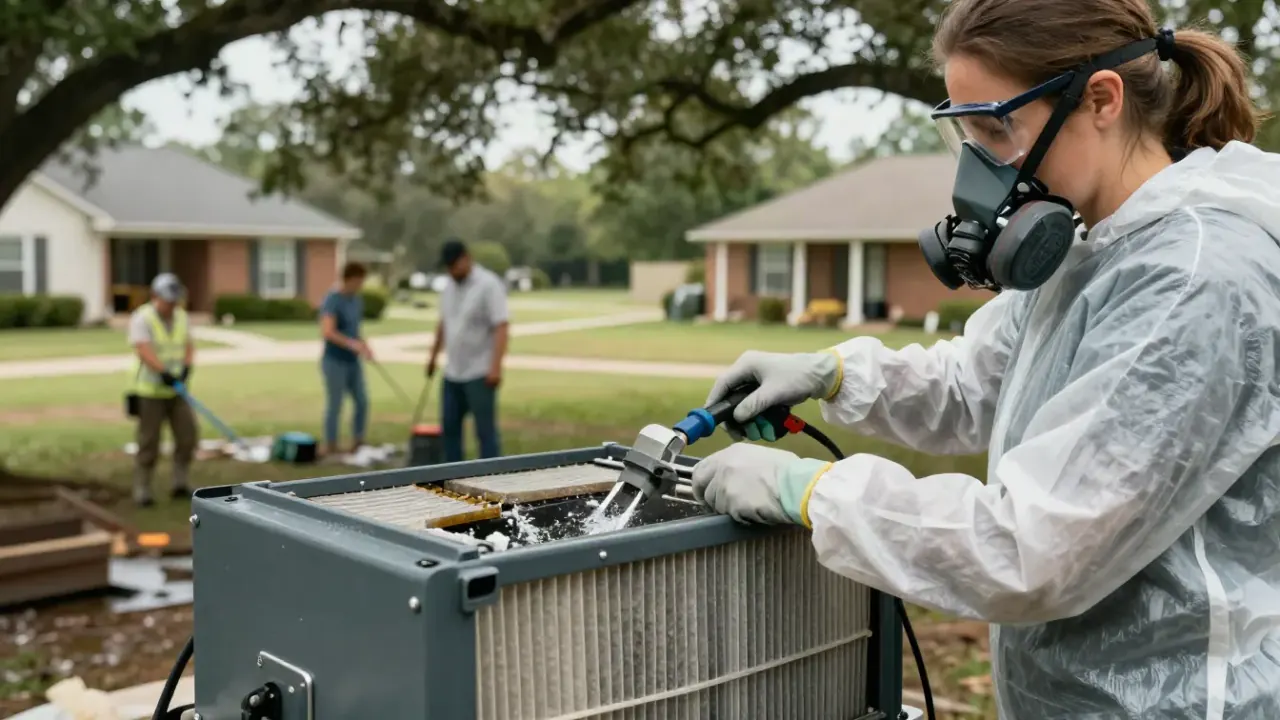
Truck-mounted extraction units pull standing water from floors, carpets, and low areas. For sewage backups we use dedicated equipment and sewage cleanup chemicals to handle contamination safely. Extraction typically takes two to six hours depending on volume, and it is the step that stops the damage from spreading further.
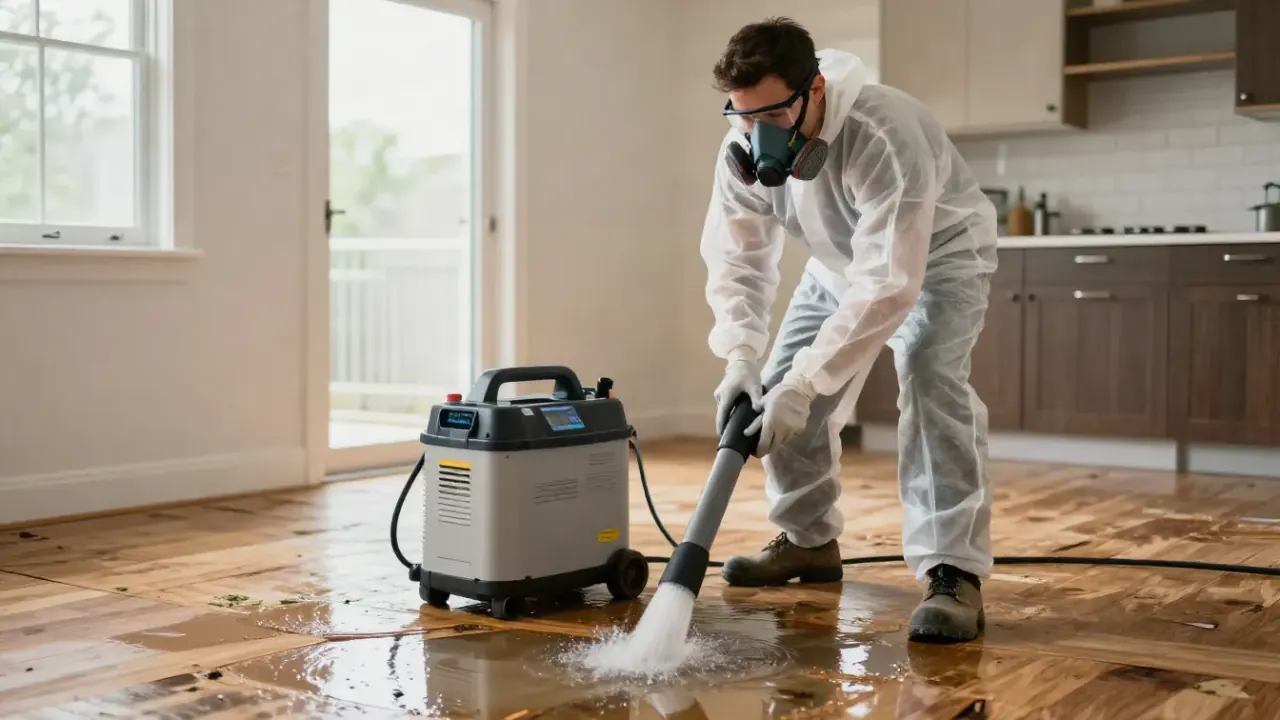
We place air movers and dehumidifiers to dry framing, drywall, and subfloors. Desiccant dehumidifiers handle humid conditions that refrigerant units cannot. We monitor moisture daily and adjust equipment placement until readings match dry standard. Most residential dry-downs take three to five days.
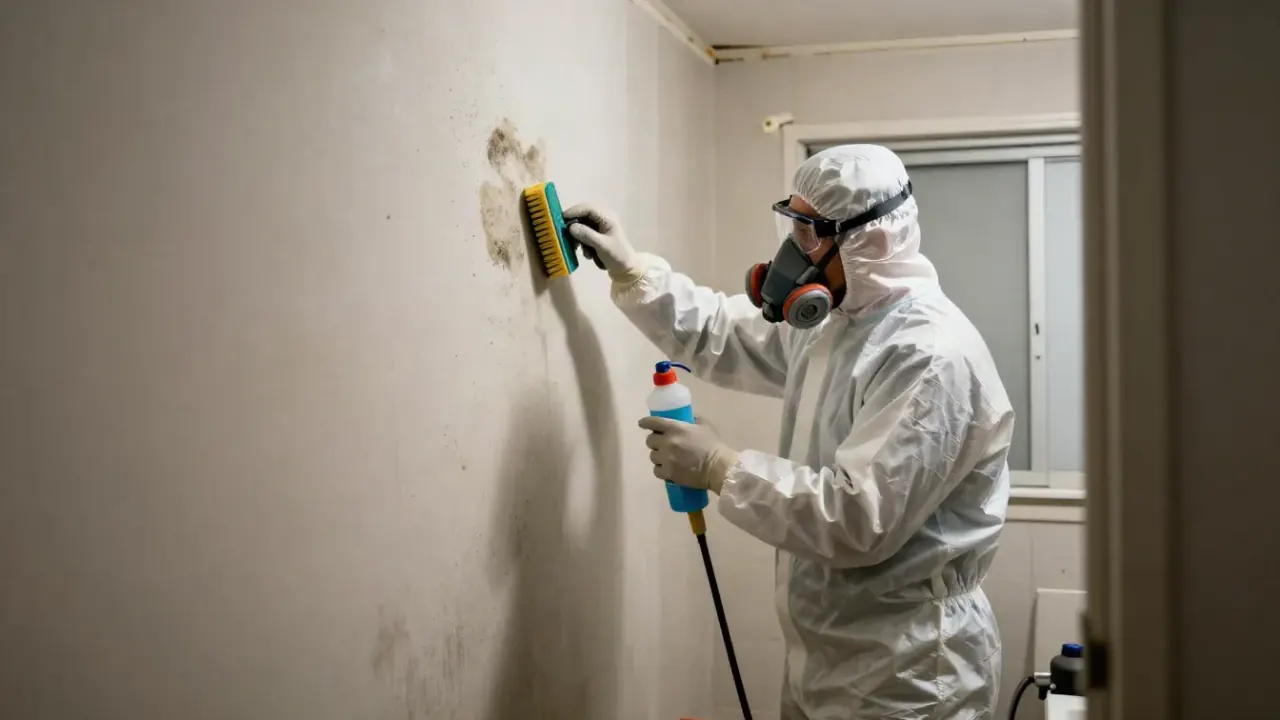
Before we pull equipment, we take final moisture readings and compare them to our day-one baseline. You get a completion report with photos and readings you can hand to your insurance company. If any area is still above dry standard, we keep drying. We do not close a job on a wet floor.
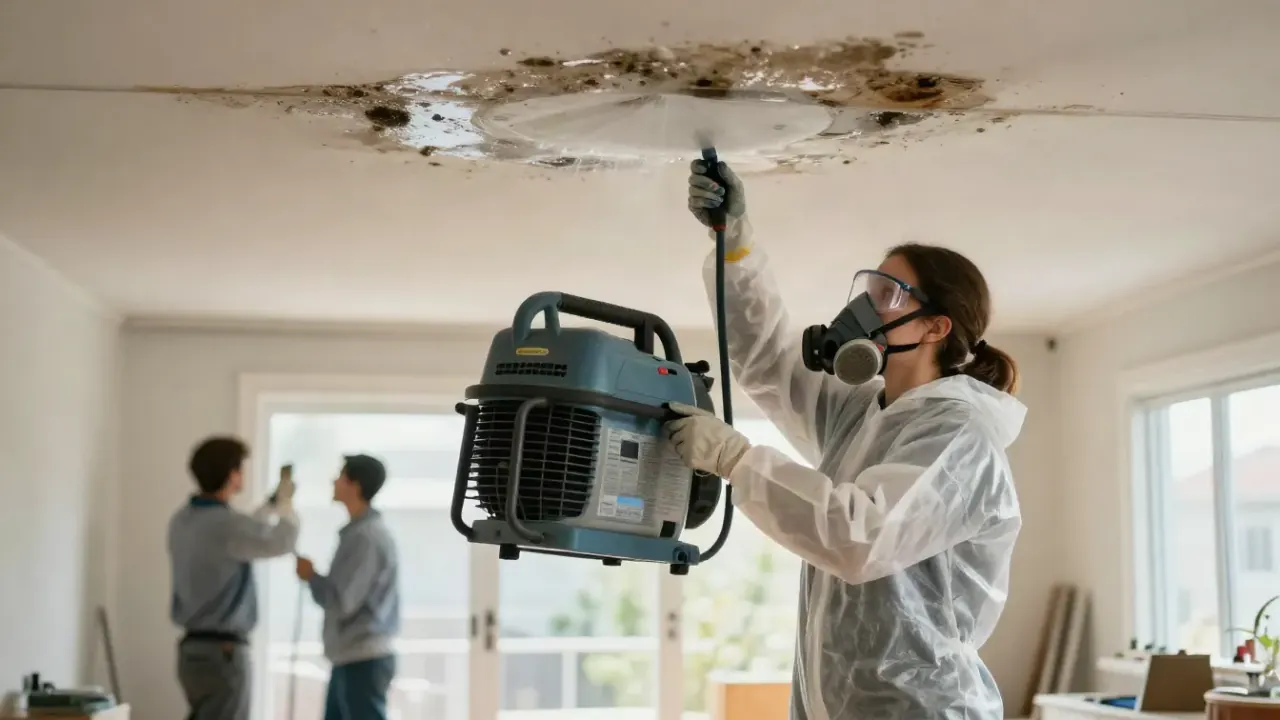
Move across a circle, or focus it and press Enter, for an illustrative thermal view of the photograph.
Used to measure moisture content in drywall, wood, and concrete. These readings tell us where water has spread and when materials are dry.
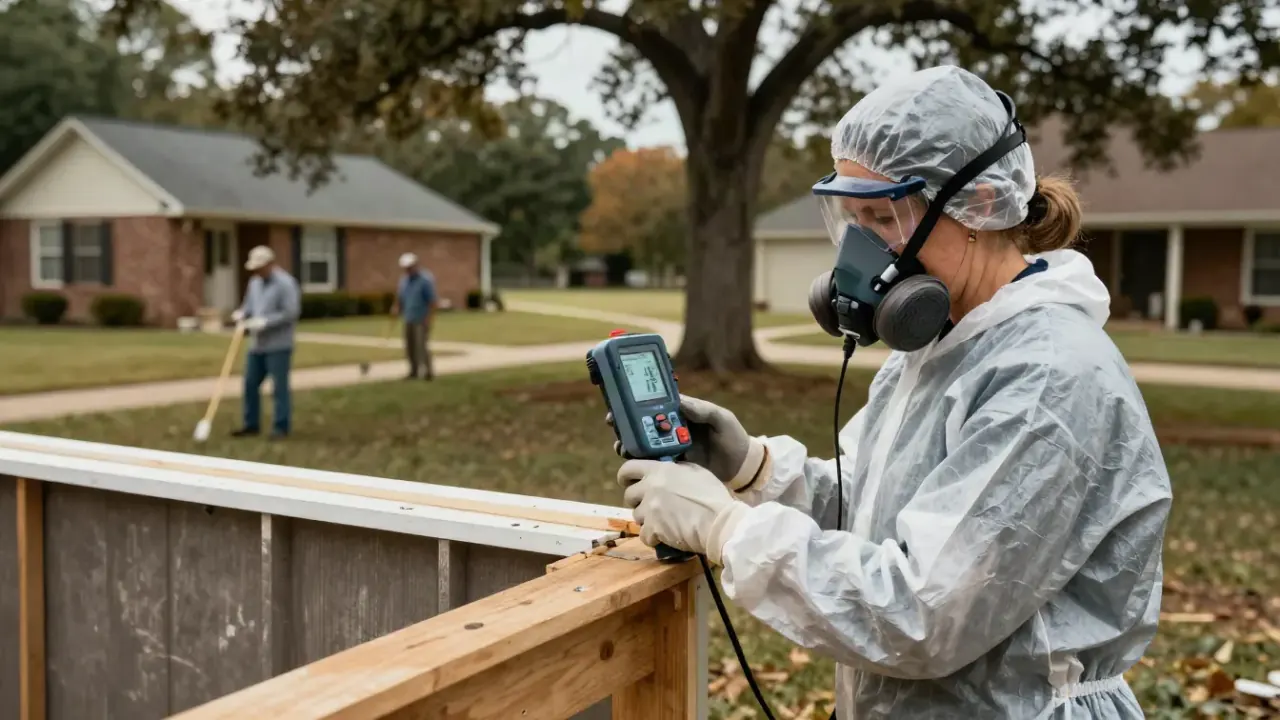
Reveal temperature differences that indicate hidden moisture behind walls and under floors. We use these to map the full extent of the water damage.
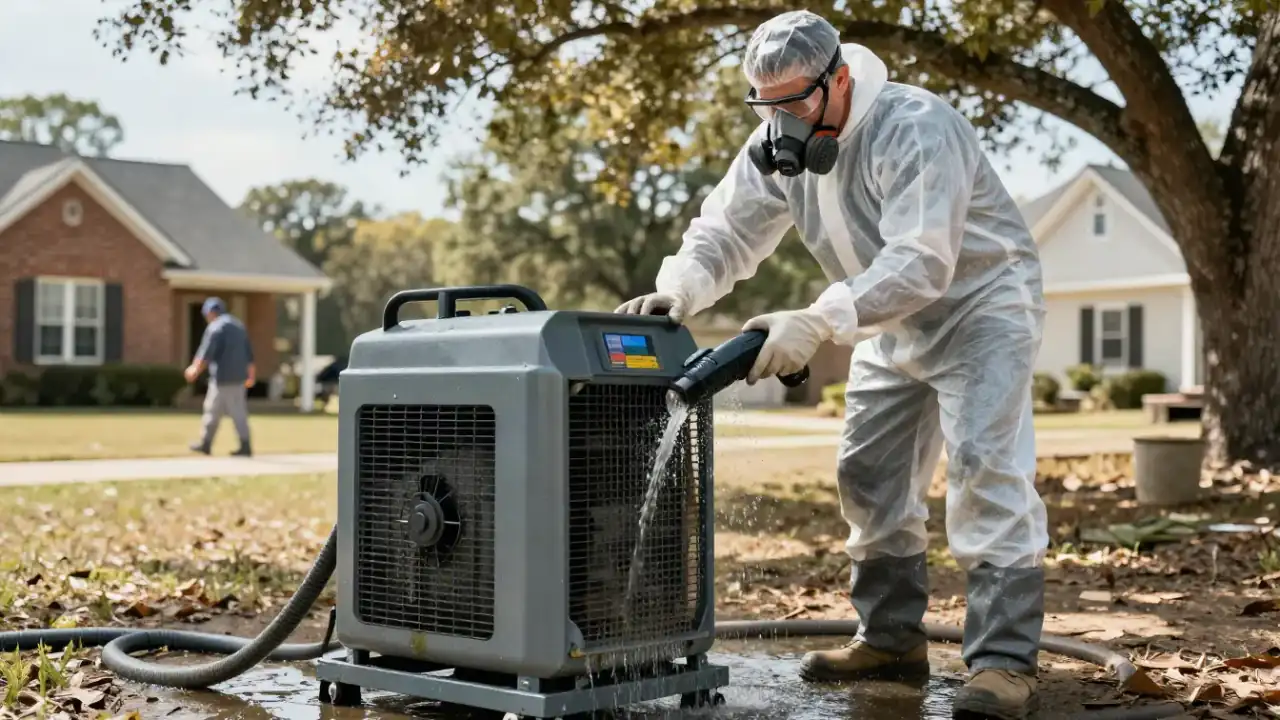
High-velocity fans that evaporate moisture from wet surfaces. We place them strategically to create airflow across floors and walls.
Remove moisture from the air to speed drying. We use both refrigerant and desiccant units depending on the conditions.
Truck-mounted or portable units that pull standing water from carpets and hard floors. These are the first line of defense in any flood.
Thermal views are illustrative, generated from the photographs.
Small cameras that let us see inside walls and under floors without tearing them open. We use them to confirm moisture in hidden cavities.
The industry standard for water damage restoration. It defines how to categorize water, classify damage, and dry structures. We follow it on every job.
The standard for mold remediation. When mold is present, we follow S520 protocols for containment, removal, and clearance.
We take readings every day and adjust equipment until the structure meets dry standard. This is how we know when the job is truly done.
We apply EPA-registered antimicrobial solutions to wet surfaces to inhibit mold growth. This is standard on every flood job.
A pipe bursts behind the washing machine while you are at work, flooding the laundry room and hallway.
We extract the water, remove wet drywall and insulation, and set up drying equipment. We also check adjacent rooms for hidden moisture.
Outcome: The laundry room and hallway are dry in three days, and the repair scope is documented for your insurance claim.
Heavy spring storms push water through your back door and into the living room overnight.
We treat the water as contaminated, extract it, and apply antimicrobial solutions. We then dry the flooring and baseboards.
Outcome: Your living room is dry and sanitized within four days, with no mold growth.
You wake up to a flooded basement with two inches of water covering the floor.
We pump out the water, remove damaged items, and set up drying equipment. We also check the foundation for cracks that may have let water in.
Outcome: The basement is dry in three days, and we provide a report on what caused the flooding.
A toilet supply line breaks and floods the bathroom and adjoining bedroom carpet.
We extract the water, pull up the carpet, and dry the subfloor. We also treat the area with antimicrobial solution.
Outcome: The bathroom and bedroom are dry in two days, and the carpet is saved.
After a storm, you notice water stains on the ceiling and a musty smell in the attic.
We inspect the attic with thermal imaging, find the roof leak, and dry the insulation and framing. We also check for mold growth.
Outcome: The attic is dry, the mold risk is eliminated, and you have documentation for a roof repair claim.
Richmond sits in Fort Bend County where clay soil holds water and older plumbing is common. Spring storms dump heavy rain in short windows, and that water has to go somewhere. When it backs up into homes, we see it first in slab leaks, foundation water intrusion, and roof leaks. The building stock varies from mid-century homes near downtown to new construction in Aliana and Harvest Green.
Newer homes are tighter, which means moisture gets trapped inside walls longer. Older homes have more entry points. We adjust our drying approach based on what we find. If you need flooded basement restoration richmond tx or flood damage repair after heavy rain richmond TX, we know the local conditions that cause it.
We also work with Fort Bend County code requirements and pull permits when structural repairs are needed.
Before: A supply line under the kitchen sink burst overnight, flooding the kitchen, hallway, and part of the living room. Water had been sitting for six hours before the homeowner woke up.
After: We extracted 40 gallons of water, removed wet drywall, and set up drying equipment. The structure was dry in four days, and the homeowner only had to replace baseboards and a section of drywall.
Check supply lines under sinks annually and replace plastic lines with braided stainless steel. Know where your main shut-off valve is located.
Before: Heavy rain pushed water through a back door and into the living room and dining room. The carpet was soaked, and water had wicked up the drywall about six inches.
After: We extracted the water, removed the carpet pad, and dried the carpet in place. The drywall was dried without removal. The entire job took three days and saved the homeowner the cost of new flooring.
Keep gutters clear and check that exterior doors have proper weather stripping. Consider a flood barrier for doors in low-lying areas.
Before: A root intrusion caused a sewage backup that flooded a bathroom and adjacent hallway. The water was category 3 and posed a health risk to the family.
After: We removed the contaminated water, disposed of affected materials, and sanitized the area with sewage cleanup chemicals. The home was safe and dry in five days, and we provided documentation for the insurance claim.
Have your sewer line inspected every two years if you have mature trees. Avoid pouring grease down drains, and consider a backwater valve.
These are the most common flood scenarios we handle in Richmond. If you are dealing with any of these, call us before the damage spreads.
Fast, measured drying that protects your home and your claim.
We arrive with truck-mounted extraction units and pull standing water fast, often within the first two hours of your call. The longer water sits, the deeper it wicks into drywall and insulation. Getting it out same-day is the single biggest factor in whether your floors and walls survive.
Mold can start growing in 24 to 48 hours after a flood. We apply antimicrobial solutions and set up containment so spores do not spread to clean rooms.
Every job gets moisture readings, thermal images, and a photo log from day one. Adjusters want proof of the loss and proof of the dry-down. We provide both, which speeds up claims and reduces the back-and-forth that delays your repairs.
Daily moisture checks confirm the structure is dry before we remove air movers and dehumidifiers. That final reading is what protects you from a callback six months later when a hidden pocket of moisture turns into a bigger repair.
What a written scope covers and what shapes it. Prices are set by the business after the first look.
Included
Depends on
Clear records you can keep and share.
Shows where water is
Before, during, after
Daily readings and equipment
Final readings and summary
Not all flood water is the same. The category determines how we handle it and what can be saved.
Clean water from a safe source
Gray water with some contamination
Black water with harmful pathogens
A list like this tells people straight away whether you cover their street. Not listed? Call and ask: it only takes a minute.
Based in richmond and covering the places around it. Pick one for local details.
Category 1 clean water in one room is on the low end. Category 3 sewage backups affecting multiple rooms push higher. We give you a written scope before work starts so there are no surprises.
First, stop the water source if you can safely reach it. Then call us at +1 832-225-4606. Do not run your HVAC system, because it can spread contaminated air. Move furniture and valuables off wet carpet if it is safe. Take photos before you touch anything. We handle the rest, including extraction, drying, and documentation for your claim.
It depends on the source. Sudden burst pipes and appliance failures are usually covered under standard homeowners policies. Rising water from storms typically requires separate flood insurance through NFIP or a private carrier. We document every job so your adjuster has what they need, and we work directly with most major carriers.
Extraction takes two to six hours. Structural drying usually runs three to five days for a typical home, longer if materials like hardwood or thick insulation are saturated. After drying, repairs like drywall and paint add another one to three weeks depending on scope. We give you a timeline after the initial inspection.
Other services from the same team.
Water damage gets worse every hour. Call +1 832-225-4606 and let us get your home dry.
If water is still coming in, call us first at +1 832-225-4606. For non-emergency questions, email info@waterrestorationsexpert.com and we will get back to you the same business day.